
Guest — sign in to save your enquiries.
My account
Grape Valley is a lush, vine-draped oasis tucked into the Flaming Mountains near Turpan, where Uyghur villages have cultivated grapes for over two thousand years. It offers a cool, fragrant escape from the desert heat, with trellised lanes, drying houses, and lively folk performances. Our private guide ensures you navigate the valley's scattered sights smoothly and connect with local culture.
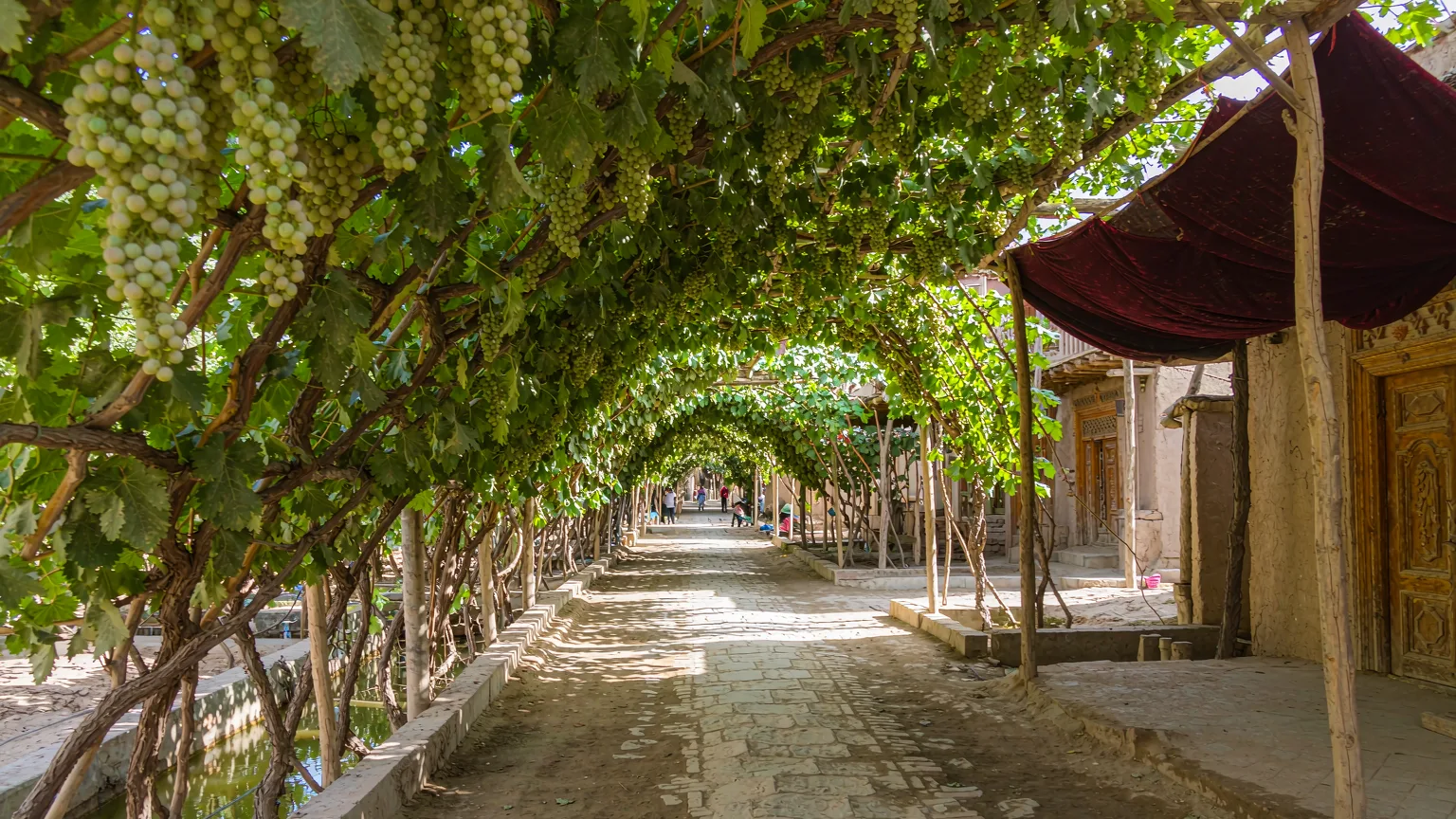
Grape Valley (Putao Gou) lies in a narrow canyon about 10 kilometers northeast of Turpan, at the foot of the Flaming Mountains. For centuries, its natural spring-fed streams and unique microclimate have supported viticulture, producing some of China's finest seedless white grapes. The valley is home to Uyghur farming communities whose ancestors have tended these vines since the Tang Dynasty. Its 5A rating reflects not only scenic beauty but also its living cultural landscape, where traditional irrigation channels (karez) still nourish the fields.
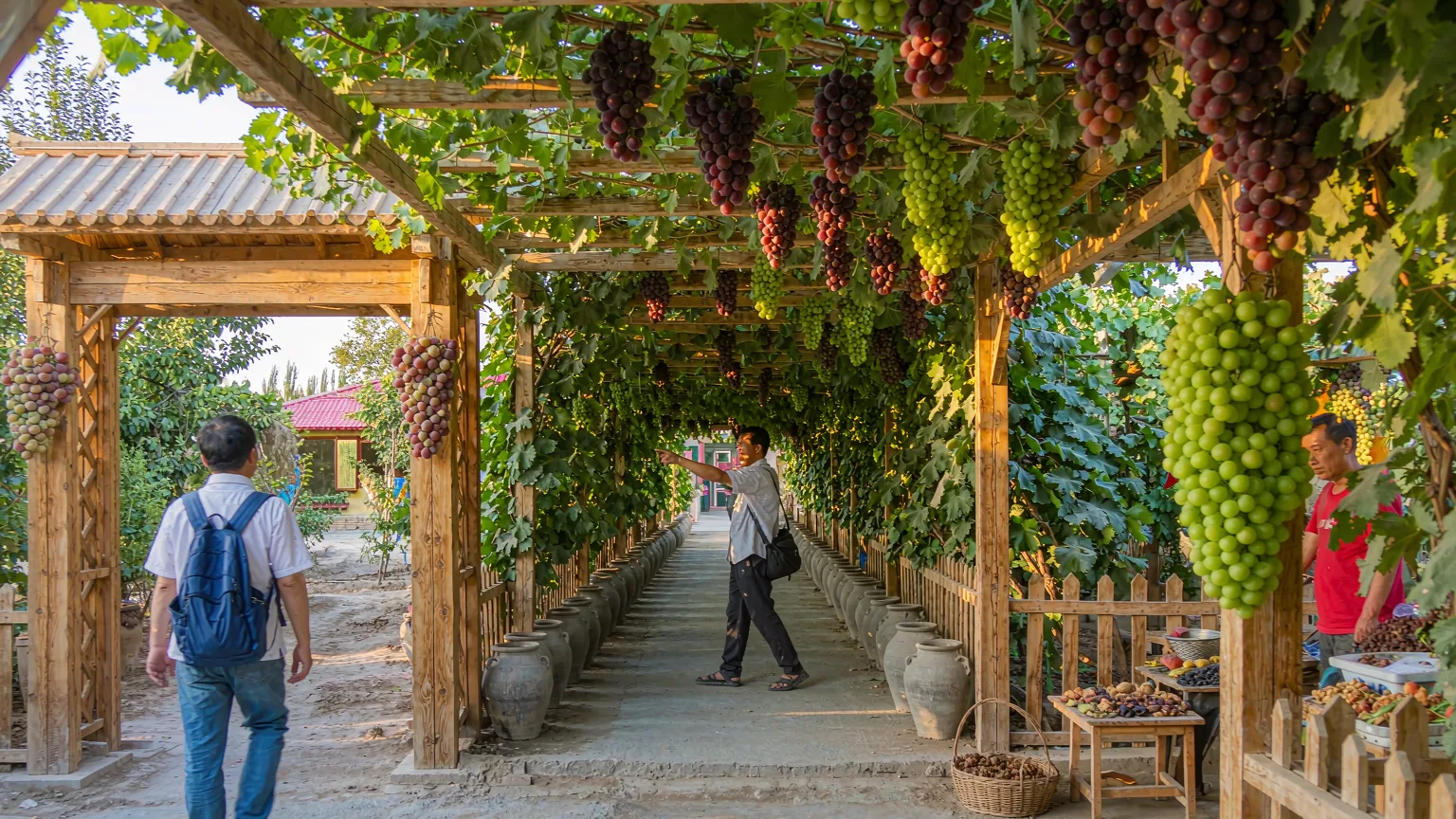
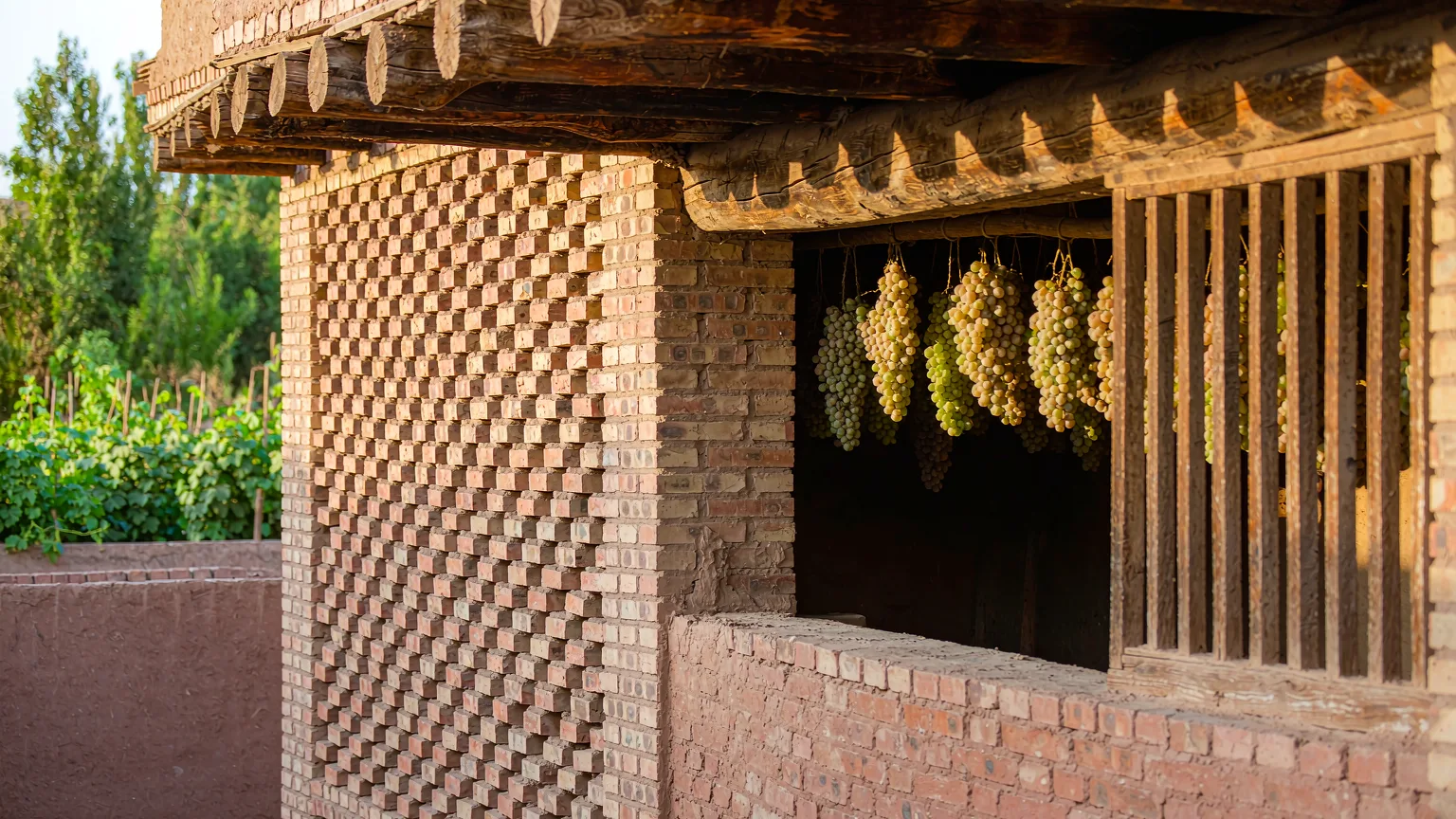
The valley stretches roughly 8 kilometers, with the main visitor area centered around a Uyghur village. Here you'll find grape trellises forming natural tunnels, mud-brick drying houses with ventilated holes, and family-run courtyards. The local Uyghur population welcomes visitors with music, dance, and fruit. While tourism has brought modernization, the valley retains an authentic agricultural rhythm. Our guides can arrange a visit to a family home for a glimpse of daily life and a taste of freshly picked grapes in season.
From Turpan city, Grape Valley is about a 20-minute drive (10 km) northeast. Taxis are readily available and should cost around ¥30–50; agree on the fare beforehand or use Didi. Alternatively, join a guided tour that includes hotel pickup. Public buses are limited, so a private car is more convenient. It pairs well with a morning visit to the Karez Irrigation Museum and an afternoon at the Flaming Mountains, making a full day of Turpan's highlights.
Admission is ¥60 during peak season (May–October) and ¥45 in low season. Opening hours are 8:00–21:00 in summer, 10:00–18:30 in winter. Book via WeChat mini-programs or Trip.com; foreign cards are accepted on Trip.com but not always at the gate, so bring cash or use Alipay/WeChat Pay linked to an international card.
Visit from late July to September when grapes are ripe and the valley is at its greenest. Mornings before 10:00 or late afternoons after 16:00 avoid both heat and tour groups. Weekdays are quieter than weekends. The annual Grape Festival in late August features parades and tastings, but expect larger crowds.
Yes, the main paths are stroller-friendly, and kids enjoy the shaded walks and fruit. However, some side trails have steps, so a carrier may be useful for toddlers.
Fresh grapes are available in season, but customs regulations restrict bringing fresh fruit into many countries. Dried raisins are a safer, equally delicious souvenir.
Signage is limited in English, and few locals speak it. Our private guides provide full interpretation and cultural context, making the visit far more meaningful.
Modest clothing is respectful in Uyghur villages; shorts and sleeveless tops are acceptable but may draw attention. Comfortable, breathable fabrics are best for the heat.
Tell us your dates, group size and preferences — a dedicated consultant will reach out within 24 hours.