
Guest — sign in to save your enquiries.
My account
Golden Beach, or Jinshatan, is widely considered Qingdao's finest stretch of sand — a long, gently shelving crescent of soft, golden grains and clear, calm water on the city's western Huangdao side. It is where locals and savvy visitors escape the crowded downtown beaches for a proper seaside day. With our private guide arranging transport, timing and shade, you simply arrive, swim and unwind.
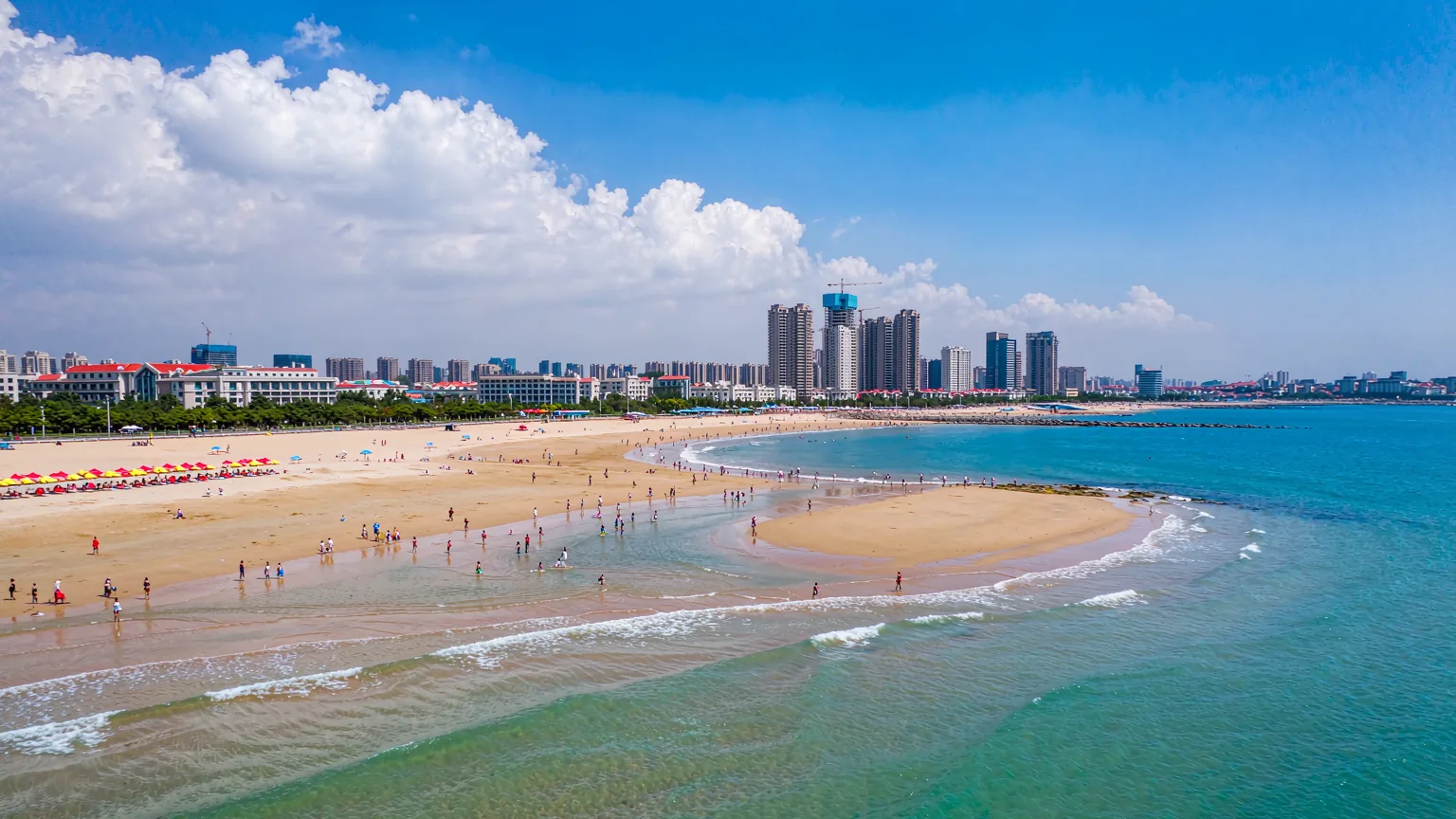
Golden Beach lies along the Yellow Sea coast in Qingdao's Huangdao District, the fast-developing area across Jiaozhou Bay from the historic old town. The beach stretches roughly 3.5 kilometres, with fine, well-sorted sand that stays firm underfoot and shelves so gradually that the water remains shallow far out — ideal for families and cautious swimmers. Because it faces south-east and is sheltered by the bay's geography, the surf is usually gentle, and the water quality is consistently rated among the best in Shandong. The name 'Jinshatan' comes from the warm golden tone of the sand, especially luminous in late-afternoon light.
Unlike Qingdao's central beaches, which can feel packed in summer, Golden Beach sits in a more open, resort-style setting with broad promenades, landscaped lawns and a growing cluster of hotels and seafood restaurants behind the dunes. The area developed rapidly after the 2008 Olympics sailing events boosted Qingdao's profile, and it now anchors the city's western tourism belt. It is a 4A-rated scenic area, meaning facilities — changing rooms, showers, lifeguards in season, boardwalks — are reliable. For travellers, it pairs naturally with a visit to the [May Fourth Square](/attractions/may-fourth-square/) and the old town, giving a full contrast of Qingdao's urban and coastal faces.
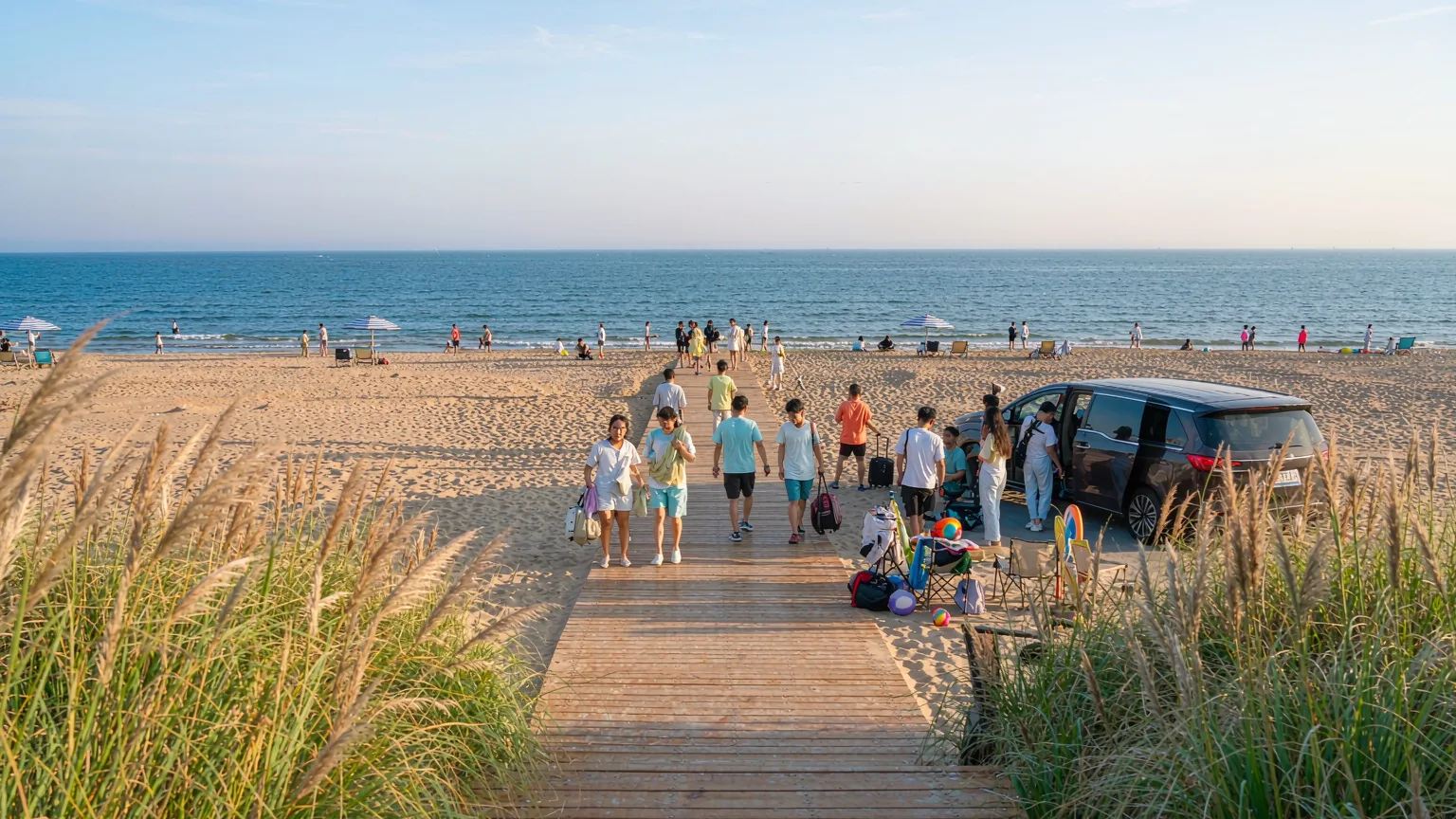
Golden Beach is in Huangdao District, west across Jiaozhou Bay from Qingdao's old town. The easiest route is the metro: Line 13 stops near the beach area (Jinshatan station), or take a taxi or private car via the Jiaozhou Bay Bridge or undersea tunnel, roughly 45–70 minutes depending on traffic. Many travellers combine it with a Huangdao day: morning beach time, seafood lunch, then back to the city. We arrange a private transfer so you avoid taxi-hailing friction and get dropped right at the best access point.
The beach itself is free to enter; paid services such as showers, changing rooms, sun loungers and umbrellas typically run ¥20–¥80 depending on the item and season. It is open year-round, with lifeguards and full facilities mainly from June to early September. No advance booking is needed for the sand, but if you want a lounger or a beachside restaurant table on a summer weekend, arrive early or let us reserve ahead. WeChat Pay and Alipay both work widely here; foreign cards can be linked to these apps, though a little cash in ¥ is a useful backup.
Visit from late June to early September for swimming, when water temperatures are comfortable and lifeguards are on duty. For comfort without the crowds, aim for a weekday morning before 10am, or come in the late afternoon from about 4pm for softer light and cooler sand. May, June and September offer pleasant walking weather with far fewer people, though the sea is bracing. Avoid midday sun in July and August.
Yes, entry to the beach is free. You only pay for optional extras like showers, changing rooms, sun loungers or umbrellas, typically ¥20–¥80 each depending on season.
Take metro Line 13 towards Jinshatan, or a taxi or private car via the Jiaozhou Bay Bridge or tunnel. The journey is roughly 45–70 minutes depending on traffic.
Generally yes in summer, when lifeguards are on duty and the water is calm and shallow. Swim between the flags, supervise children, and avoid swimming outside the June-to-September season.
Most vendors use WeChat Pay or Alipay, which you can link to an international card. Carry some cash in ¥ as a backup, since small stalls may not accept cards directly.
Tell us your dates, group size and preferences — a dedicated consultant will reach out within 24 hours.