
Guest — sign in to save your enquiries.
My account
The Giant Wild Goose Pagoda is Xi'an's most enduring symbol of the Tang dynasty's golden age of Buddhism. Built in 652 AD to house the scriptures brought back from India by the monk Xuanzang, it still rises seven storeys above the city's southern skyline. With our private guide, you'll skip the queues, decode the carvings, and hear the stories that bring this UNESCO-listed monument to life.
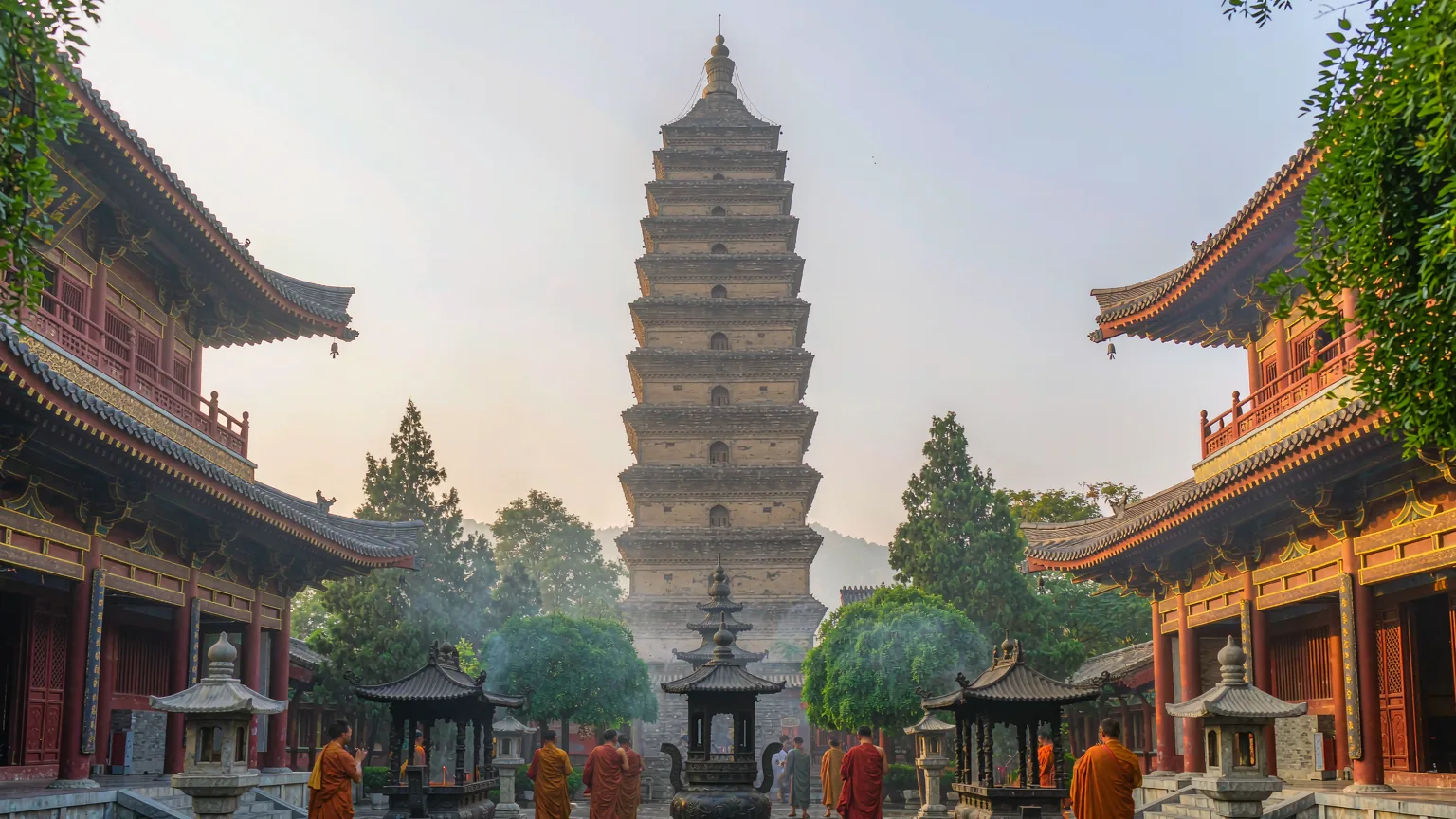
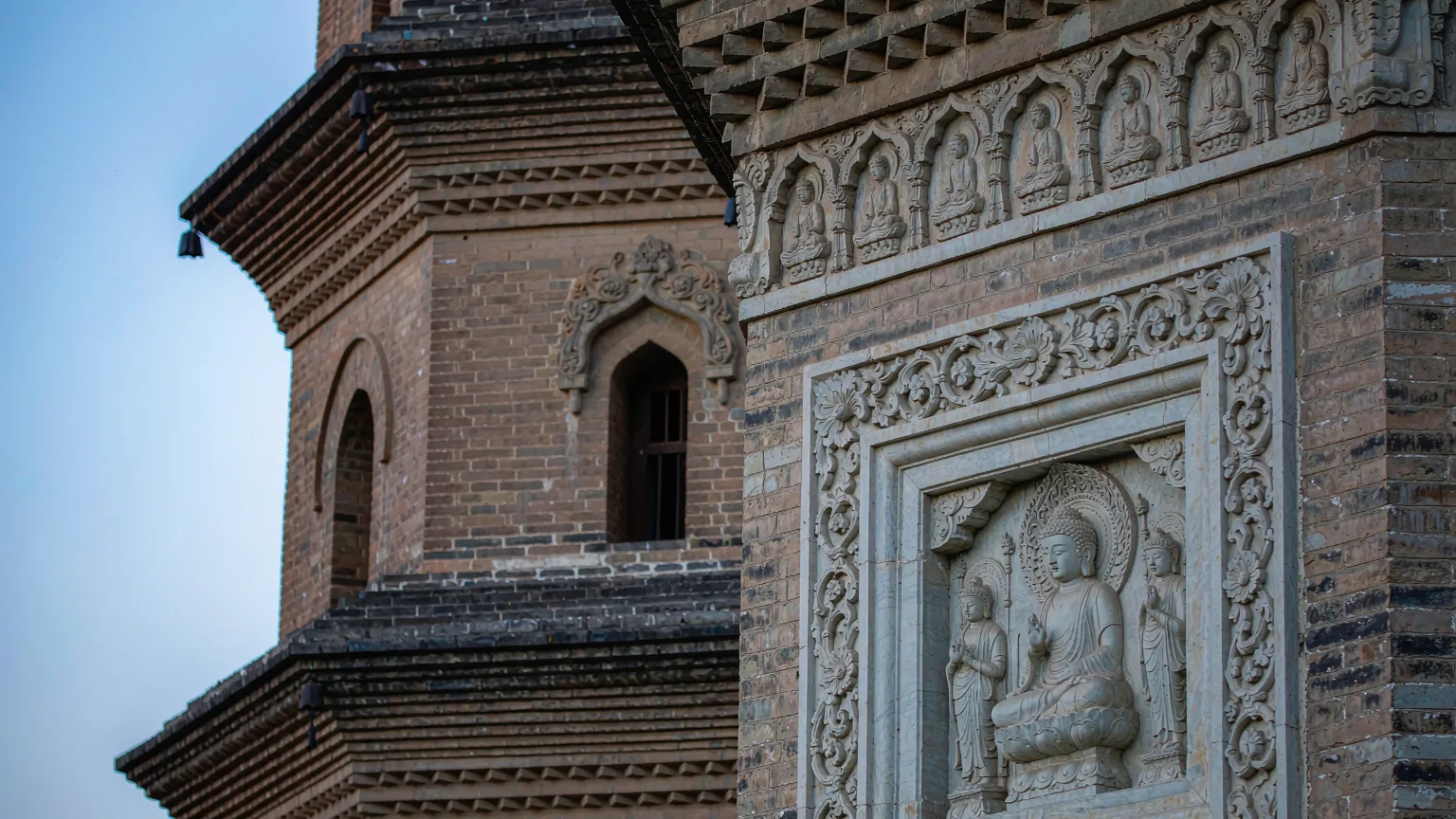
The pagoda was commissioned by Emperor Gaozong in 652 AD, originally with five storeys, to safeguard the Buddhist sutras and statues that Xuanzang had retrieved after his epic 17-year pilgrimage to India. Xuanzang, whose journey inspired the novel *Journey to the West*, supervised the translation of these texts here, making the site a fountainhead of Chinese Buddhism. Over the centuries the structure was damaged by earthquakes and rebuilt, reaching its present seven-storey, 64.5-metre height during the Ming dynasty. Its distinctive square, brick-and-wood design is a masterpiece of Tang architecture, and it was inscribed as part of the Silk Roads UNESCO World Heritage Site in 2014.
Today the pagoda anchors the sprawling Da Ci'en Temple complex, a working monastery where you can watch monks chant and locals burn incense. The grounds also include the Xuanzang Memorial Hall and a tranquil garden with ancient trees. For a deeper dive into Tang history, pair your visit with the nearby Shaanxi History Museum or the Great Mosque. Our guides can arrange a private car to whisk you between these sites, and they'll help you navigate the ticket options, including the separate fee to climb the pagoda itself.
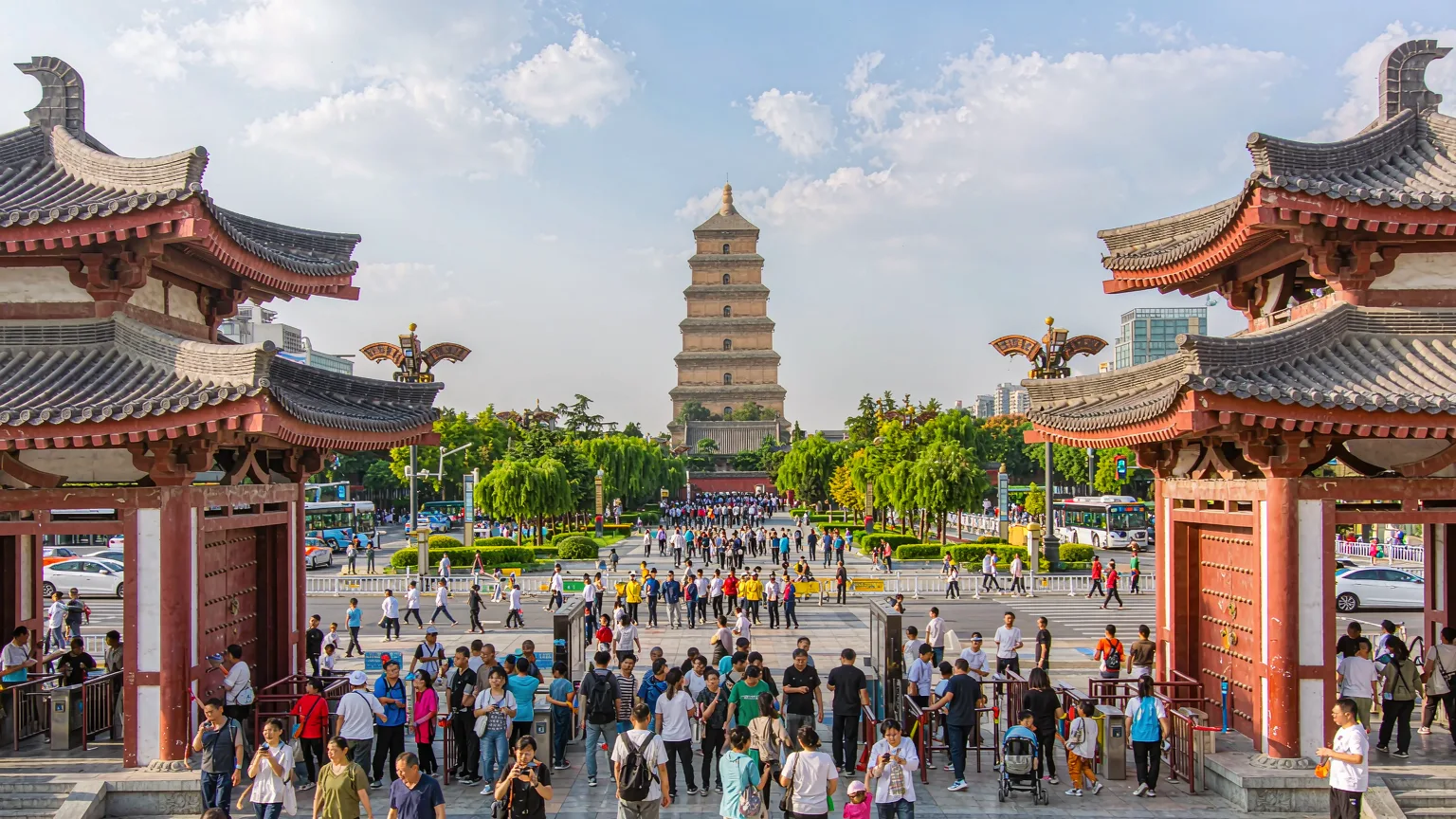
The pagoda is in the south of Xi'an, easily reached by Metro Line 3 or 4 to Dayanta Station (Exit C), a 5-minute walk from the South Square. A taxi from the Bell Tower area takes about 20 minutes and costs around ¥20–30. We often combine it with a morning at the Shaanxi History Museum, followed by lunch in the nearby Qujiang New District, then an afternoon here—our private driver can handle all transfers seamlessly.
Admission to the Da Ci'en Temple complex is ¥50 (peak season) or ¥40 (off-peak); climbing the pagoda costs an additional ¥30. Opening hours are 8:00–17:30 (later in summer). Book via the official WeChat account or Trip.com; foreign credit cards are accepted on Trip.com, but for on-site purchases, WeChat Pay or Alipay linked to an international card is the norm. Our guide can pre-book tickets to avoid sold-out time slots.
Visit in spring (April–May) or autumn (September–October) for mild weather and clear skies ideal for photography. Early morning (8:00–9:30) is quietest, with soft light on the pagoda's brick facade. Avoid weekends and Chinese public holidays, when crowds swell. Late afternoon offers golden-hour shots, and the evening fountain show (usually 20:30 in summer) is a spectacular finale.
Yes, especially in peak season. Book via the official WeChat account or Trip.com at least a day ahead. Our guide can secure timed-entry tickets for you.
If you're fit and want city views, yes. The stairs are steep and narrow, but the panorama from the top is rewarding. Those with mobility issues can enjoy the temple grounds instead.
Allow 1.5–2 hours for the temple and pagoda, plus extra time if you stay for the evening fountain show. It pairs well with a half-day tour of nearby sites.
Signage is limited in English. Our private guides provide full interpretation, or you can rent an audio guide (¥30) at the entrance, though it's less detailed.
Tell us your dates, group size and preferences — a dedicated consultant will reach out within 24 hours.