
Guest — sign in to save your enquiries.
My account
The Flaming Mountains (Huoyan Shan) are a 100-km ridge of eroded red sandstone in the Turpan Depression, famous as the fiery backdrop of Journey to the West and as one of the hottest places in China. Summer ground temperatures can exceed 70°C, yet the surrounding valleys produce sweet grapes. Our private guide times your visit for cooler hours, handles tickets, and pairs the scenery with Turpan's Silk Road sites.
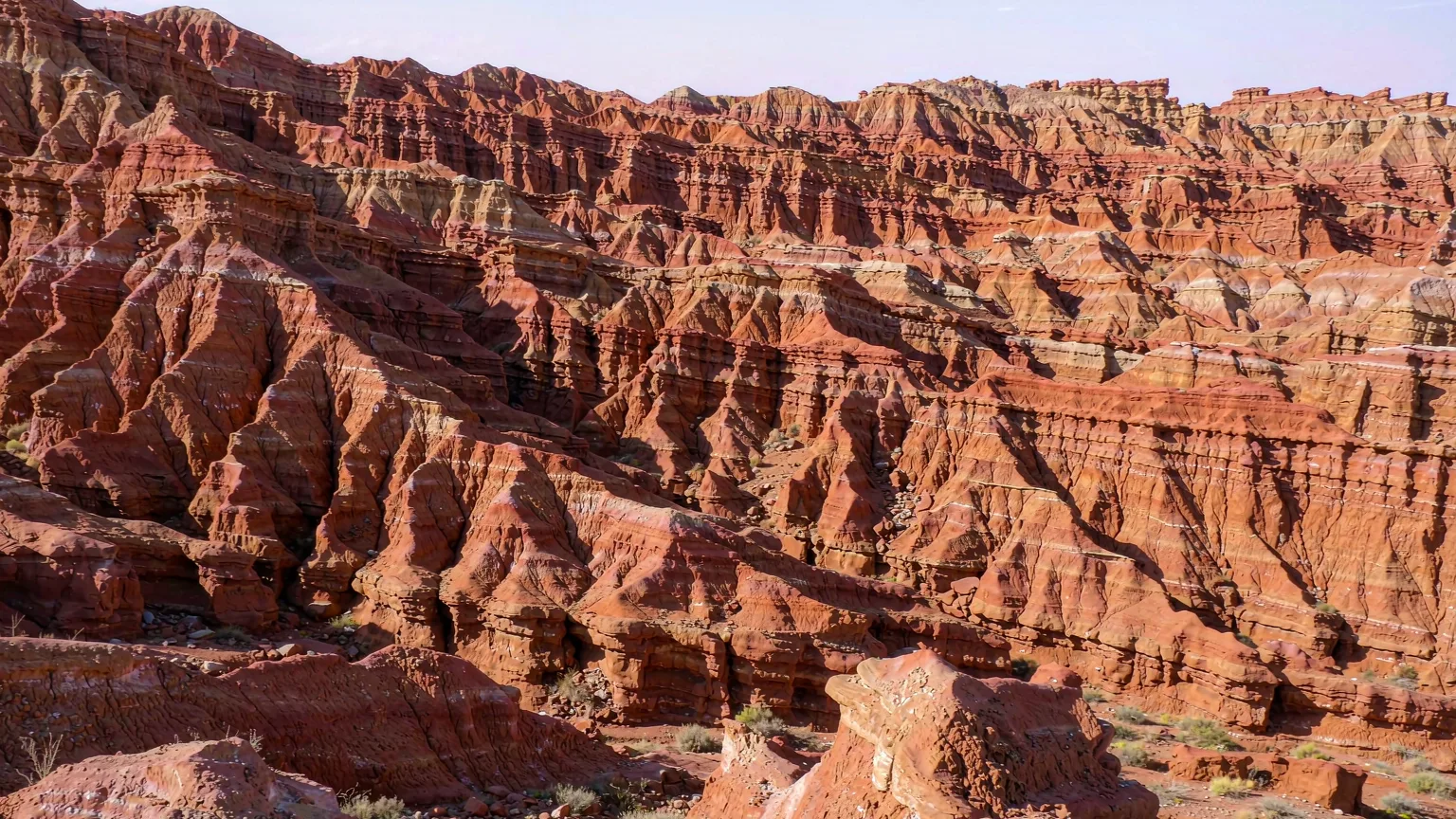
The Flaming Mountains are a geological wonder in the Turpan Basin of eastern Xinjiang. Formed by the collision of the Indian and Eurasian plates, the layered red sandstone and mudstone have been carved by wind and flash floods into a maze of gullies and knife-edge ridges. The range stretches roughly 100 km east to west, with its highest point, Tuyugou Peak, rising about 831 m. In summer, the exposed rock absorbs intense solar radiation, and surface temperatures have been recorded above 70°C, making it one of the hottest spots on Earth. The name comes from the Chinese classic Journey to the West, in which the Monkey King battles Princess Iron Fan to extinguish the flames blocking the pilgrimage route.
Despite the scorching surface, the mountains sit within the Turpan Depression, where ancient karez underground irrigation channels bring snowmelt from the Tianshan Mountains. This water supports lush grape valleys and the UNESCO-listed Jiaohe Ancient City nearby. The Flaming Mountains are a 4A-rated scenic area with a visitor centre, a long viewing corridor, and a thermometer that displays the real-time ground temperature. Most travellers visit as part of a Turpan day tour that includes the Bezeklik Thousand Buddha Caves, the Astana Tombs, and the Grape Valley. Our guides know the best angles and can arrange a private vehicle to avoid the midday heat.
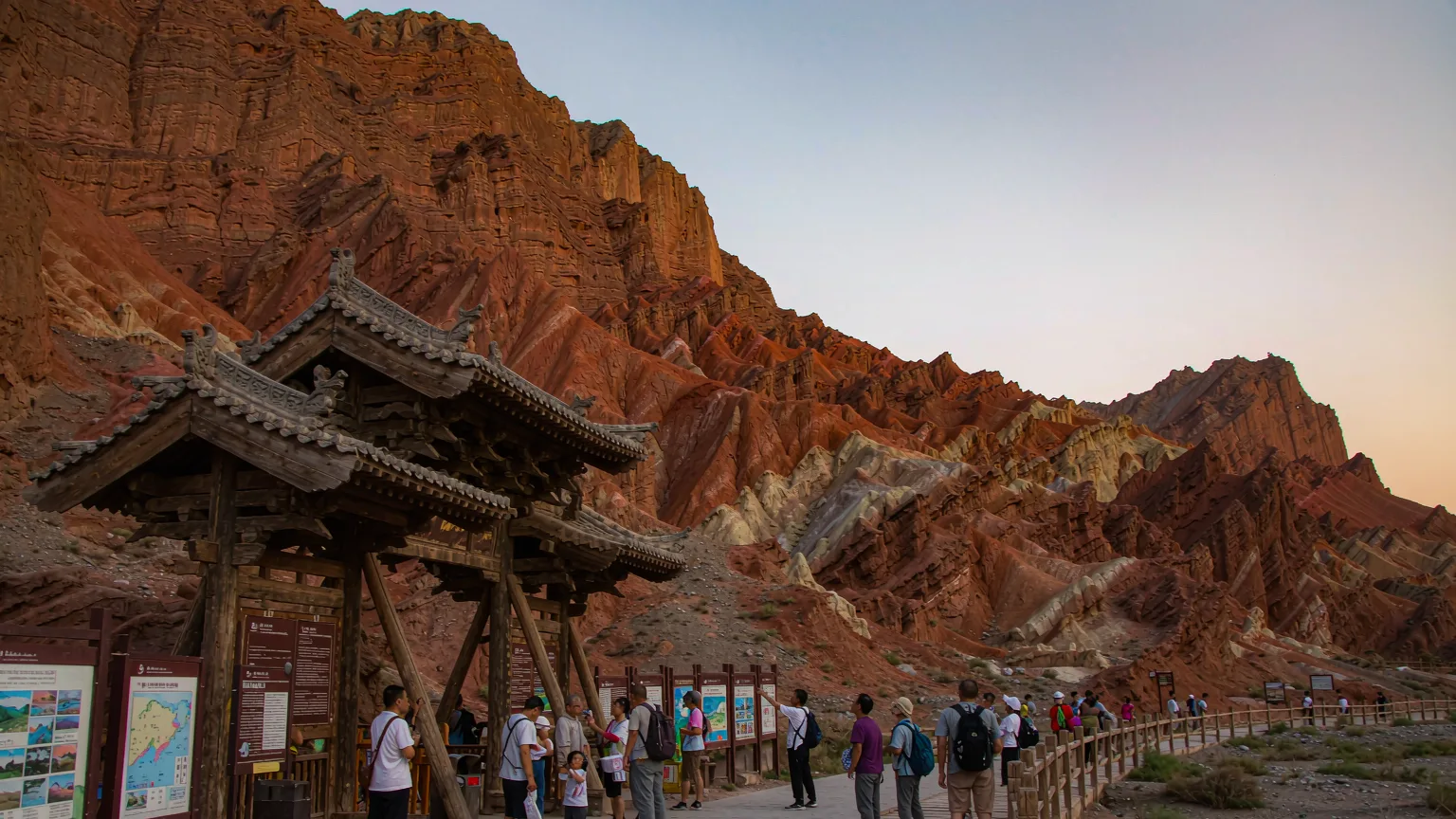
The Flaming Mountains are about 30 km east of Turpan city. Most foreign travellers base themselves in Turpan and take a private car or taxi (¥100–150 one way, 40 minutes). Public buses to Shanshan stop near the entrance but are infrequent and crowded. We recommend a private guide with a vehicle, which allows you to combine the mountains with Bezeklik Caves and Grape Valley in a half-day loop. High-speed trains from Urumqi to Turpan take about 1 hour; from Turpan Station, it's a 50-minute drive.
Admission is ¥40 per person (peak season May–October), ¥20 in low season. Opening hours are 08:00–20:00 in summer, 10:00–18:00 in winter. Tickets can be booked on-site or via WeChat mini-programs; foreign credit cards are not accepted at the gate, so bring cash or use WeChat Pay/Alipay linked to an international card. Our guide can pre-purchase tickets to skip the queue.
Visit in late April–May or September–October, when daytime temperatures are a manageable 25–30°C. If you come in summer, go at opening time (08:00) or after 18:00 to avoid the worst heat. Sunset is spectacular as the red rock glows, but check the gate closing time. Winter is cold but crowd-free, though some facilities may be limited.
Yes, if you take precautions. Stick to early morning or late afternoon, carry water, and limit exposure to 1–2 hours. Our guides monitor conditions and adjust the itinerary if needed.
It's possible by taxi or tour bus, but English signage is limited and public transport is sparse. A private guide ensures you see the best viewpoints and understand the legends.
In the novel, the pilgrim Xuanzang is blocked by a wall of fire here. Sun Wukong obtains Princess Iron Fan's magic fan to extinguish the flames, making the mountains a literary landmark.
There is a small visitor centre with basic snacks, ice cream, and souvenirs, but we recommend eating in Turpan or Grape Valley for better quality and variety.
Tell us your dates, group size and preferences — a dedicated consultant will reach out within 24 hours.