
Guest — sign in to save your enquiries.
My account
Du Fu Thatched Cottage is the tranquil Chengdu residence where China's greatest poet, Du Fu, lived from 759 to 766 and wrote some 240 poems. More than a museum, it's a living garden of bamboo, plum and lotus that honours his legacy. With our private guide, you'll decode the poetry, skip the crowds, and see why this is Chengdu's literary soul.
Du Fu Thatched Cottage Museum, on Qinghua Road in western Chengdu, preserves the site where the Tang poet Du Fu lived and wrote during his years in the city. It is the largest and best-kept memorial to Du Fu in China, combining a scholar's shrine with a classic Sichuan garden: bamboo groves, winding streams, covered corridors and stone tablets inscribed with his poems. Highlights include the rebuilt thatched cottage, the Hall of Poetry History and the Gongbu Shrine. Wander slowly along the central axis and pause at the stele corridor to read lines composed on this very spot. Allow two to three hours. Take Metro Line 4 to Caotang Road Station, then walk about ten minutes. Opening hours are 09:00–17:00; tickets and guided tours are best booked in advance, and opening details may change, so check before you go.
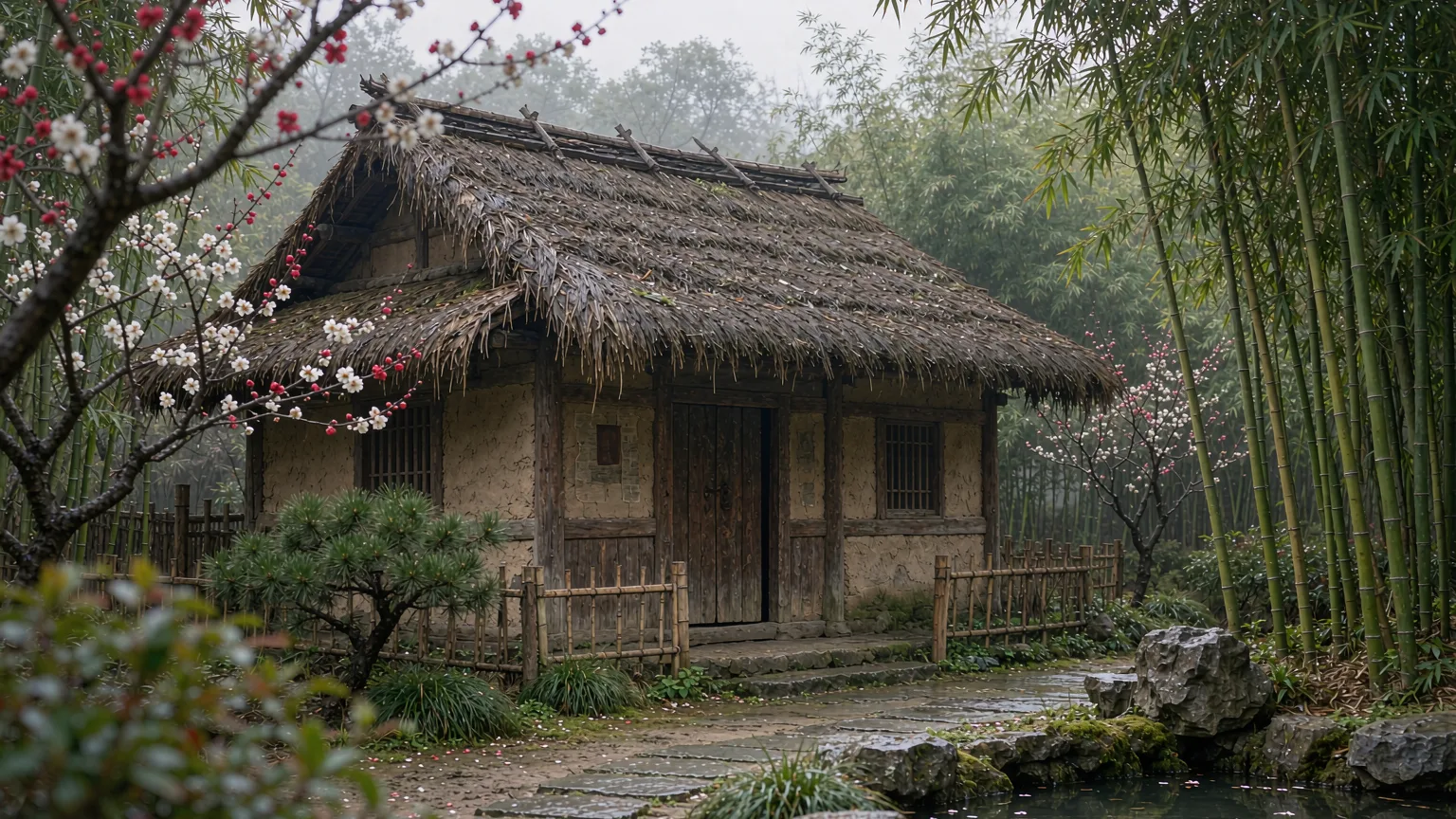
Du Fu (712–770) is revered as China's 'Poet Sage', and his Chengdu years were among his most productive. Fleeing the An Lushan Rebellion, he built a simple thatched cottage beside the Huanhua Stream in 759. Here he wrote 'My Thatched Hut Was Torn Apart by Autumn Winds' and 'Happy Rain on a Spring Night', poems that blend personal hardship with deep compassion for ordinary people. After he left, the cottage fell into ruin, but from the Song dynasty onward it was rebuilt and expanded as a shrine. Today it's a 4A-rated museum and the heart of Chinese literary pilgrimage.
The 16-hectare complex is less a single building than a sequence of memorial halls, reconstructed rooms, and classical Sichuanese gardens. You'll see the Hall of Great Poets with Du Fu's statues, the thatched cottage itself (a 16th-century reconstruction), and the Water Pavilion where he watched egrets. The Bamboo Grove and Plum Garden reflect his love of nature. For context, pair it with the nearby Sichuan Museum or Qingyang Palace. Our guides can arrange a private poetry reading or calligraphy session, turning a quiet stroll into a profound cultural encounter.
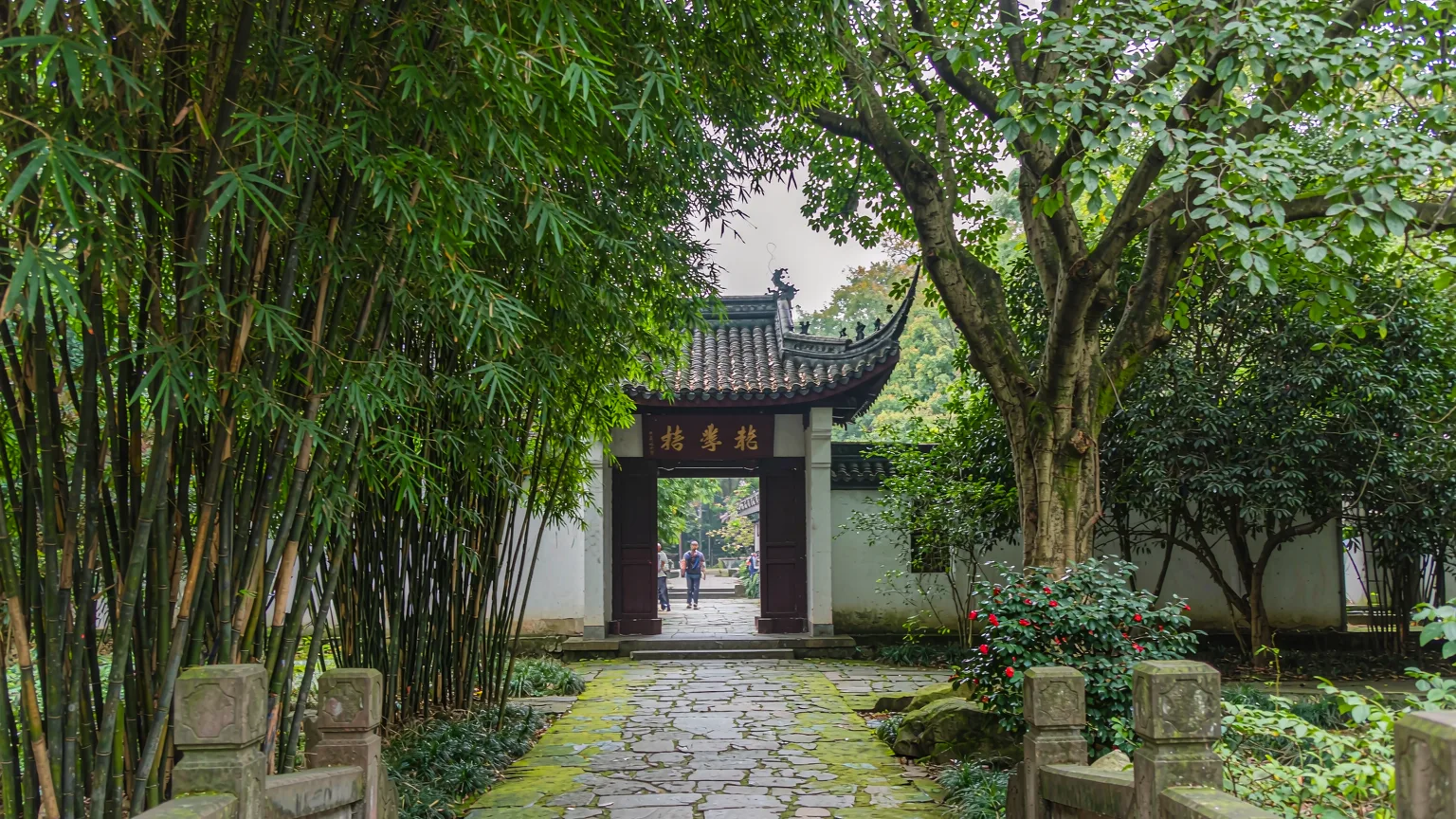
Du Fu Thatched Cottage is at 37 Qinghua Road, about 5 km west of Tianfu Square. Take Metro Line 4 to 'Chengdu University of TCM & Sichuan Provincial People's Hospital' (Exit B), then walk 10 minutes. A taxi from downtown costs ¥20–30 and takes 20–30 minutes. We usually combine it with a morning at Qingyang Palace or the Sichuan Museum, then lunch in the nearby Wide and Narrow Alleys. Our private car can drop you at the gate and wait, making it seamless.
Admission is ¥50 (peak season) or ¥30 (off-peak). Opening hours: 8:00–18:30 (peak), 8:00–18:00 (off-peak). Book via WeChat mini-program 'Du Fu Thatched Cottage' or Trip.com; foreign passports are accepted at the gate. WeChat Pay and Alipay now accept international cards, so you can pay by phone. Our guide can pre-book tickets to avoid queues.
Visit in spring (March–May) for plum and cherry blossoms, or autumn (September–November) for cool weather and golden ginkgo. Early morning (8:00–10:00) is quietest, with soft light for photos. Avoid weekends and Chinese holidays, when school groups crowd the halls. A weekday afternoon is also peaceful, especially in the bamboo groves.
Absolutely. Our private guide brings the poetry and history to life in English, and the gardens are beautiful even without context. It's a peaceful escape from Chengdu's bustle.
Plan 1.5–2 hours for a guided visit, or up to 3 hours if you join a calligraphy session or linger in the gardens. It's compact and easy to navigate.
Yes, but during peak season queues can be long. We recommend booking online via Trip.com or WeChat, or letting our guide handle it. Bring your passport for verification.
Mostly yes—the main paths are paved and flat, but some garden trails have steps. Wheelchairs are available for free at the entrance with a deposit.
Tell us your dates, group size and preferences — a dedicated consultant will reach out within 24 hours.