
Guest — sign in to save your enquiries.
My account
Dai Park preserves five living Dai villages where stilted wooden houses, Buddhist temples and betel-nut palms sit beside the Mekong. It is the most accessible place in Xishuangbanna to see Water-Splashing Festival rituals and palm-leaf scripture culture without staging. With our private guide, you skip the tour-bus scrum, meet families who actually live here, and time your visit to the daily water ceremony.
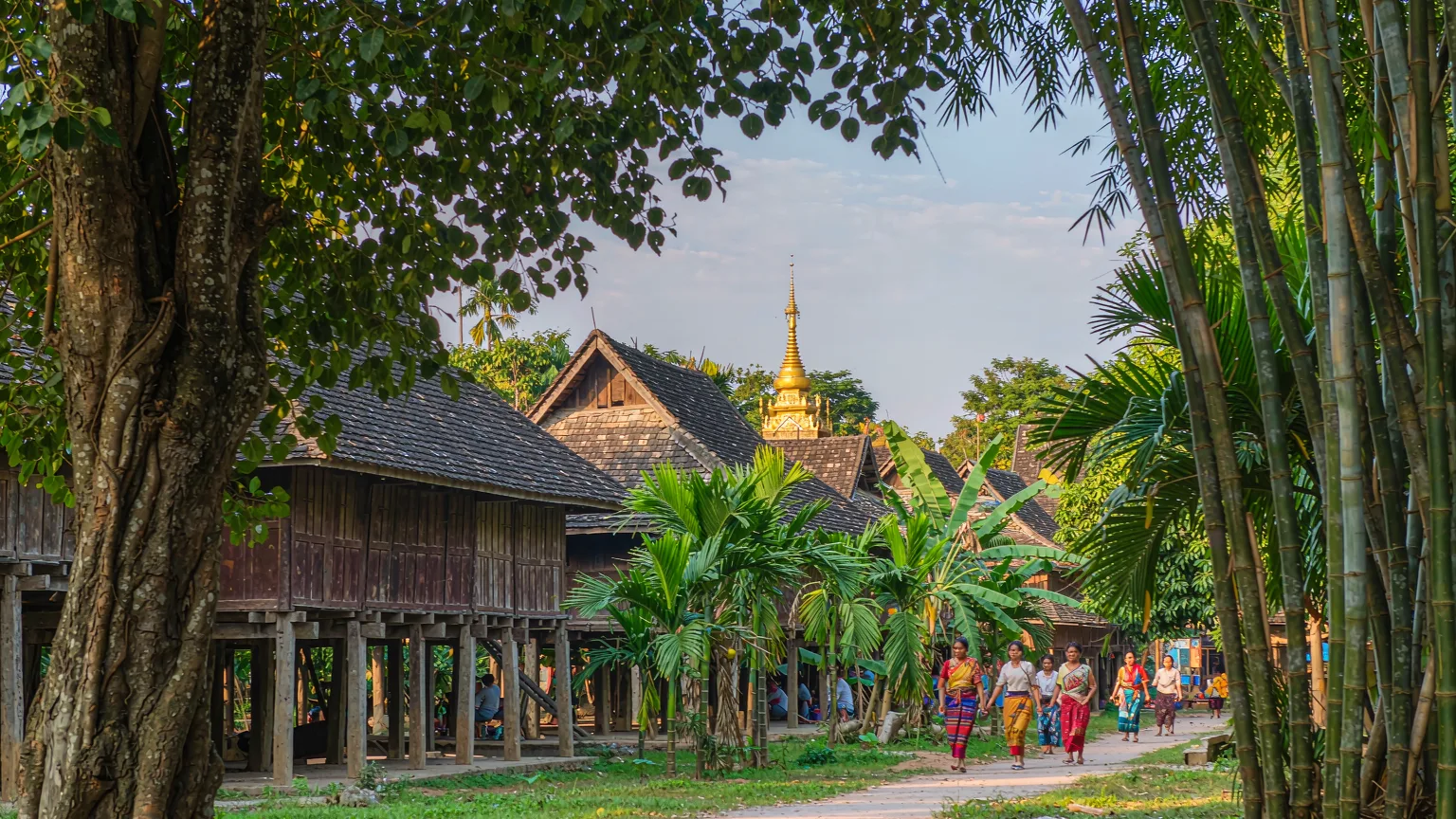
Dai Park (傣族园) spreads across roughly 3.3 square kilometres of the Lancang River floodplain, about 27 km southeast of Jinghong, the capital of Xishuangbanna Dai Autonomous Prefecture. It comprises five genuine Dai villages — Manting, Manjiang, Manchunman, Manzha and Manting — rather than a purpose-built theme park. The Dai are one of China's 55 recognised ethnic minorities and the dominant group in this prefecture, sharing language, Theravada Buddhist faith and wet-rice culture with communities across Laos, Myanmar and northern Thailand. The park opened in 1999 as a conservation and tourism project, and residents still farm, weave and worship here.
The architecture is the draw: two-storey wooden houses raised on posts, with open ground floors for storage and shaded verandas above. Each village has a Buddhist temple (mian) with a gilded roof and a bodhi tree, and many young men still ordain temporarily as novices. The park's cultural centre explains palm-leaf scriptures (贝叶经), Buddhist texts incised into prepared leaves and bound with string, a tradition shared across Tai-speaking Theravada societies. The daily Water-Splashing Festival performance condenses the April New Year rite into a short, visitor-friendly ceremony — a genuine blessing ritual, not a water fight, though you will get wet if you stand close.
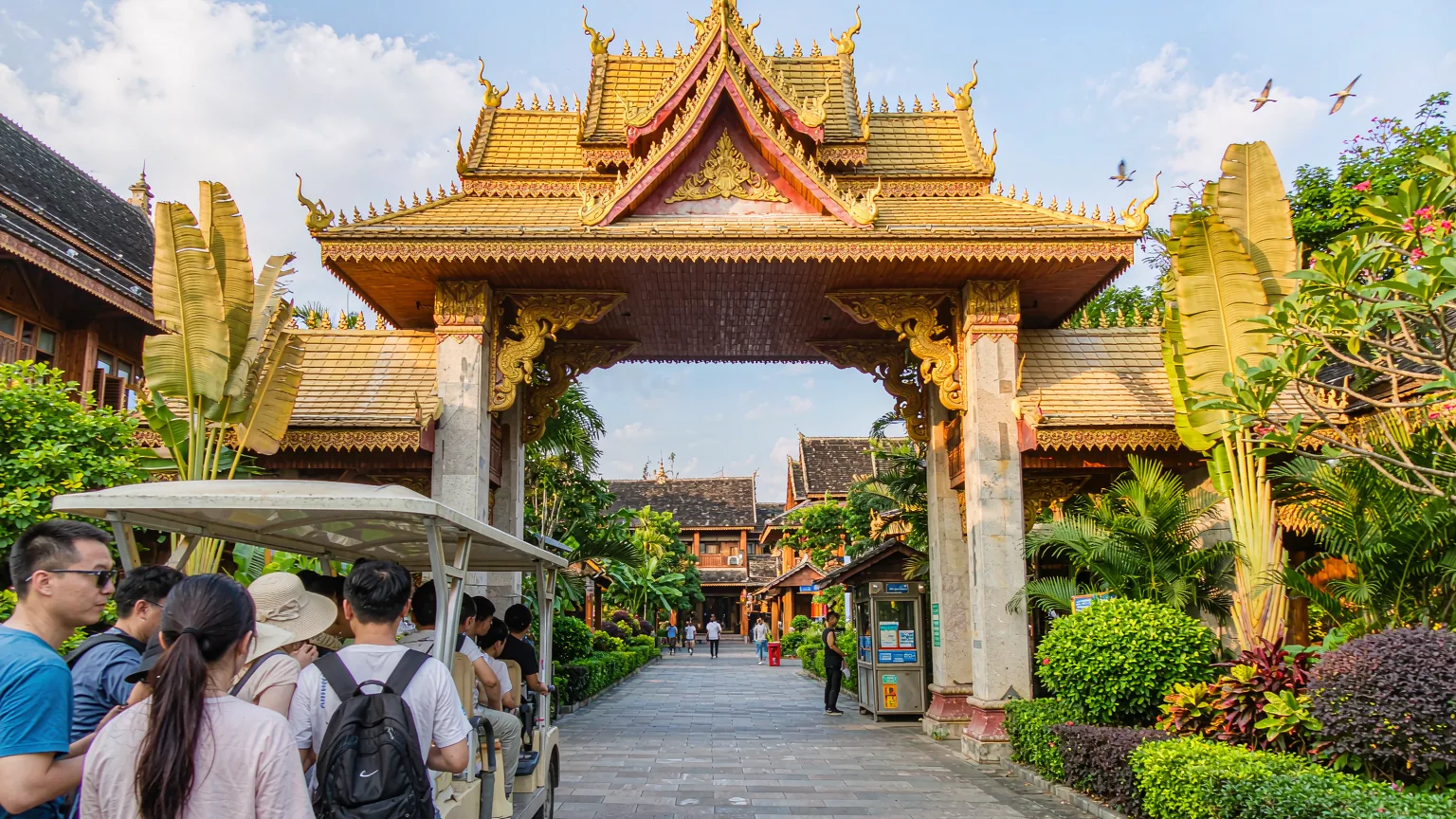
Dai Park sits about 27 km southeast of Jinghong, roughly 40–50 minutes by private car or taxi (¥80–120 each way). There is no metro; local buses from Jinghong's bus station run infrequently, so we arrange a private transfer with an English-speaking guide. Most travellers pair it with a morning at Manting Park or a Mekong river cruise, returning to Jinghong for dinner. If you are coming from Kunming, take the high-speed train to Xishuangbanna Station (about 3.5 hours), then transfer by car.
Admission is around ¥50–80 per adult, with discounts for children, students and seniors; the water-splashing ceremony and some performances may be included or ticketed separately. Opening hours are typically 08:00–18:00, with the last entry around 17:00. Book through our team or a Chinese app in advance during holidays. Foreign cards are rarely accepted at the gate — set up WeChat Pay or Alipay with an international card before you travel, or carry cash.
Visit from November to April, during Xishuangbanna's dry, warm season; the actual Water-Splashing Festival falls in mid-April and is spectacular but extremely crowded. On ordinary days, arrive by 09:00 to see villages before tour groups, or come after 15:00 for softer light and cooler temperatures. Avoid the May–October rainy season if you dislike humidity and sudden downpours.
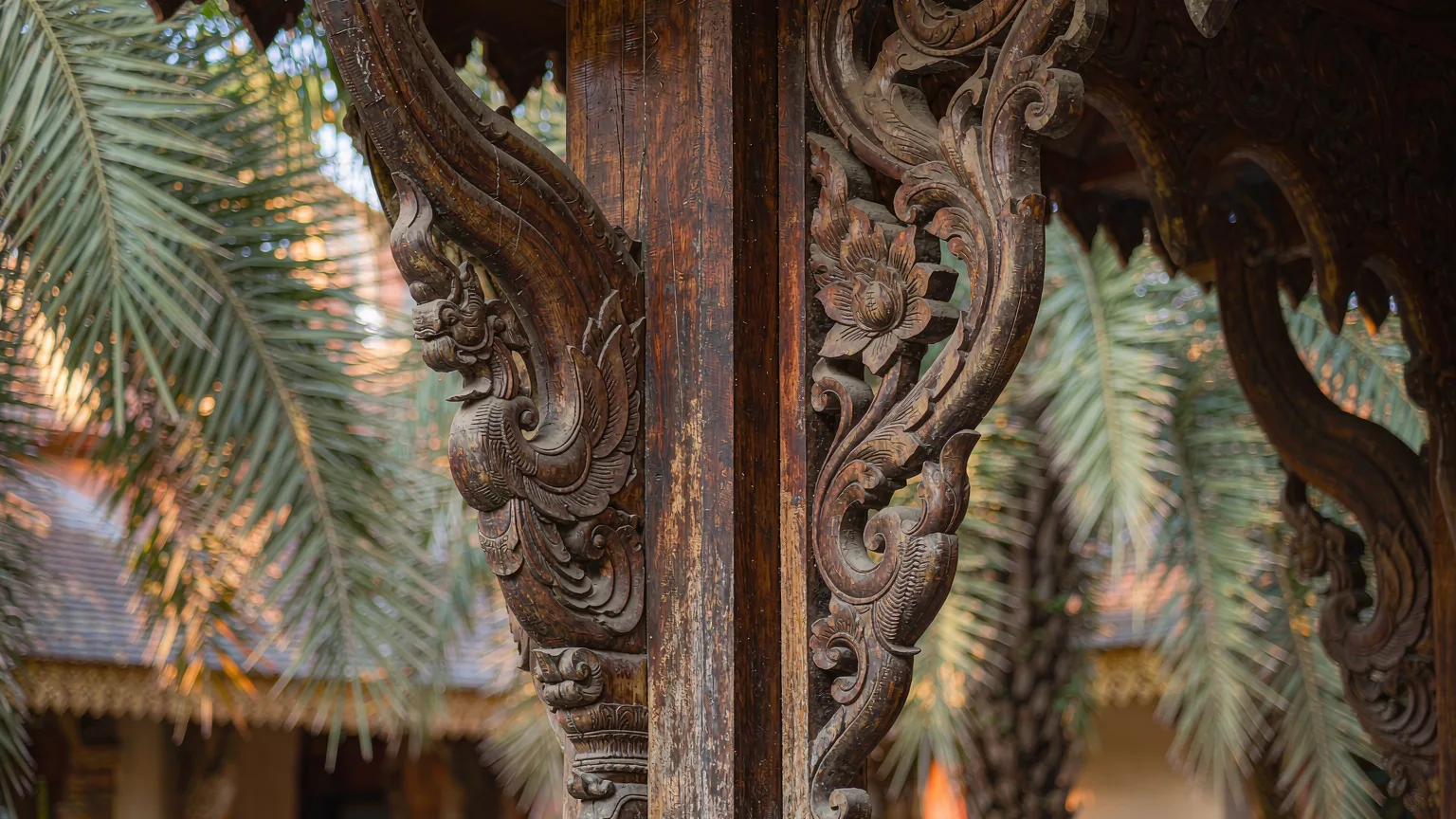
It is five genuine Dai villages where people live and farm year-round. Tourism infrastructure has been added, but daily life, temples and rice fields are authentic rather than staged.
A short visitor-friendly version runs daily at set times, usually late morning and mid-afternoon. The full Water-Splashing Festival takes place around 13–15 April each year.
Yes. It is about 27 km from Jinghong, roughly 40–50 minutes by car. Most visitors spend three to four hours, making it an easy half-day trip.
Not strictly, but English signage is limited and few villagers speak English. Our guide handles transfers, translation and cultural context, which most travellers find essential.
Tell us your dates, group size and preferences — a dedicated consultant will reach out within 24 hours.