
Guest — sign in to save your enquiries.
My account
Changbai Waterfall is the only outlet of Heaven Lake, plunging 68 metres over a cliff to form the true source of the Songhua River. It is the dramatic climax of any visit to Changbai Mountain's north slope, and our private guide ensures you reach it without the usual queue chaos, timing your arrival for the best light and fewest crowds.
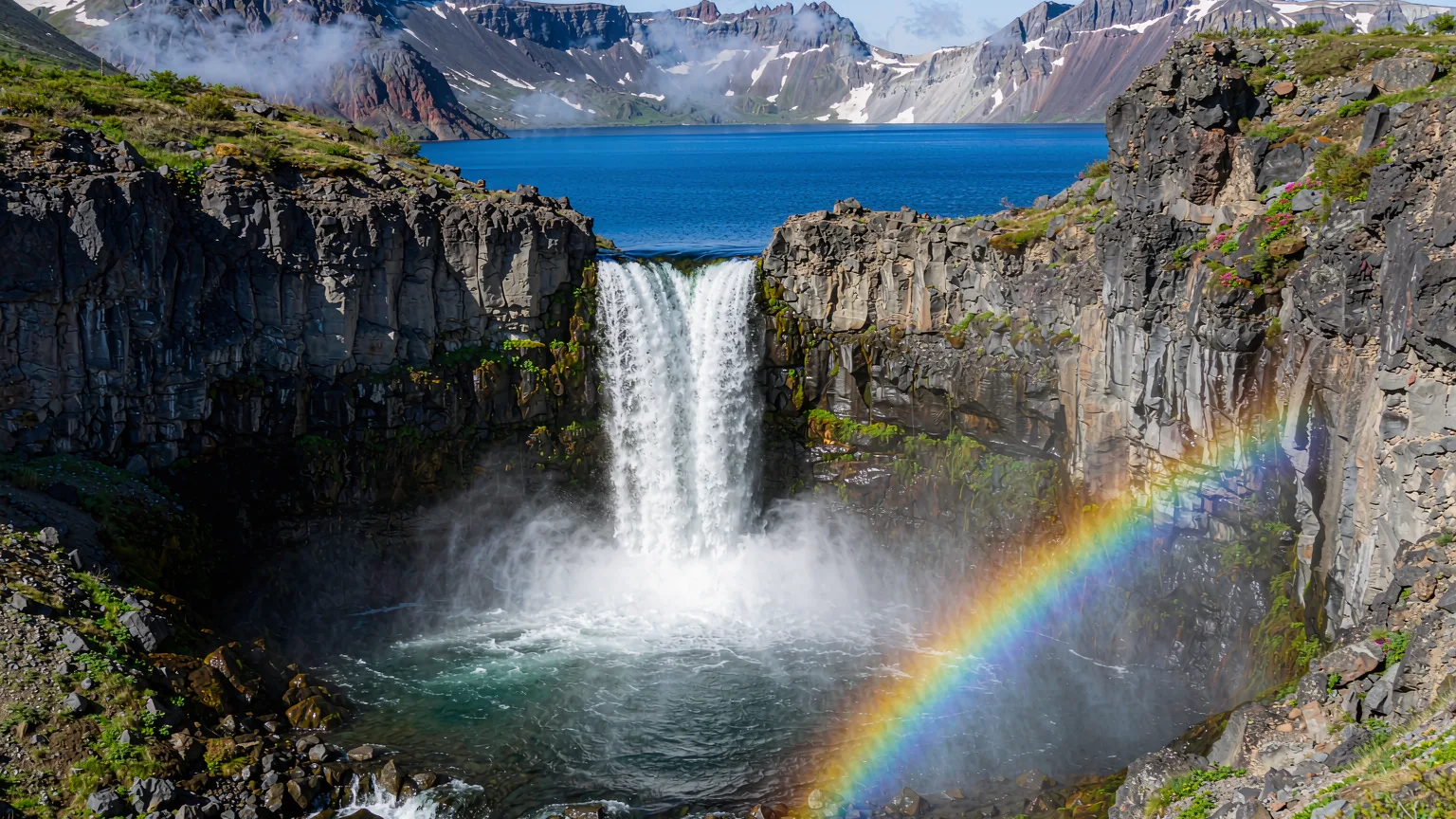
Changbai Waterfall (长白瀑布) is fed exclusively by Heaven Lake (天池), the volcanic crater lake at the summit of Changbai Mountain. The lake has no other surface outlet, so its overflow spills through a narrow gap in the northern rim, dropping 68 metres in a single, thunderous sheet. This is the official source of the Songhua River, one of Northeast China's great waterways. The waterfall sits at about 2,100 metres above sea level, surrounded by dark basalt cliffs and alpine tundra. In winter it partially freezes into a blue-white ice curtain, while summer melt swells it into a roaring torrent.
The site is part of the Changbai Mountain North Scenic Area, a 5A-rated reserve shared with the China-North Korea border. From the shuttle bus stop, a wooden boardwalk climbs gently for roughly 15 minutes to a viewing platform directly opposite the falls. The mist can soak you within seconds, so a light rain jacket is wise. The waterfall's volume peaks in July and August when snowmelt and monsoon rains combine; in late autumn, the surrounding larch and birch turn gold. Our guides know exactly which platform gives the cleanest shot without spray on the lens.
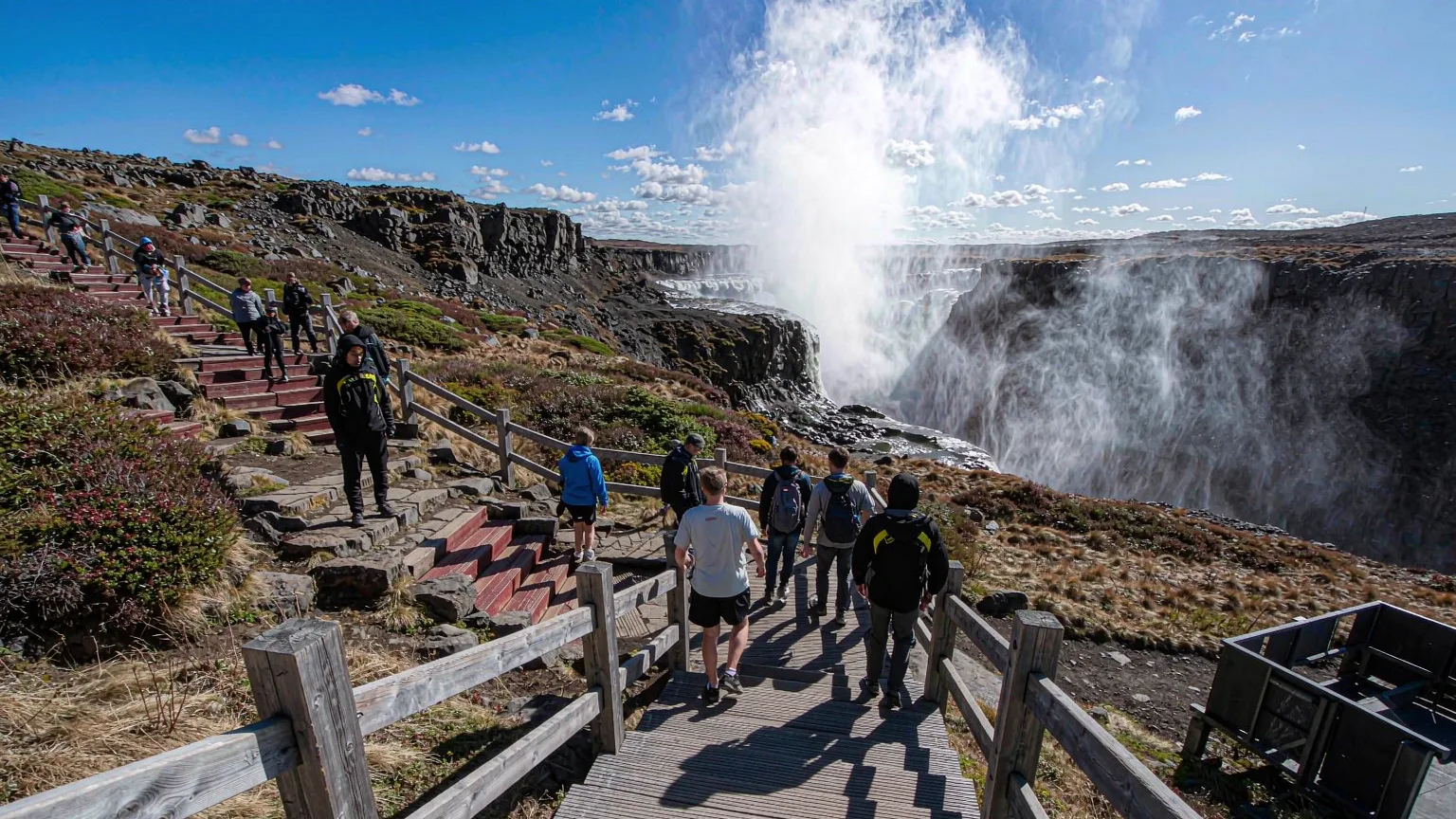
Most foreign travellers reach Changbai Waterfall via the north slope entrance at Erdaobaihe (二道白河). From Yanji, high-speed trains take about 2.5 hours to Dunhua or Antu, then a private transfer of 1.5–2 hours. Our driver meets you at the station and handles the scenic-area shuttle tickets. Inside the park, you take a compulsory eco-bus to the waterfall stop, then walk 15 minutes. It slots perfectly into a full-day north-slope itinerary with Heaven Lake and the hot springs.
Entry to the Changbai Mountain North Scenic Area costs ¥105 per person in peak season (May–Oct) and ¥85 in low season, plus a compulsory eco-bus fee of ¥85 and a ¥80 shuttle to the waterfall area. Opening hours are roughly 7:30–17:00, with last entry at 15:00. Book online via the official WeChat mini-program at least one day ahead; foreign cards are not accepted, so use WeChat Pay or Alipay linked to an international card, or ask our guide to reserve on your behalf.
July to September offers the fullest waterfall and the best chance of a clear Heaven Lake view, though afternoon crowds are heaviest. Arrive at the north gate by 7:00 to catch the first eco-bus. For photographers, late September brings golden larch and thinner crowds. Winter (Dec–Feb) transforms the falls into an ice sculpture, but check that the boardwalk is open before committing.
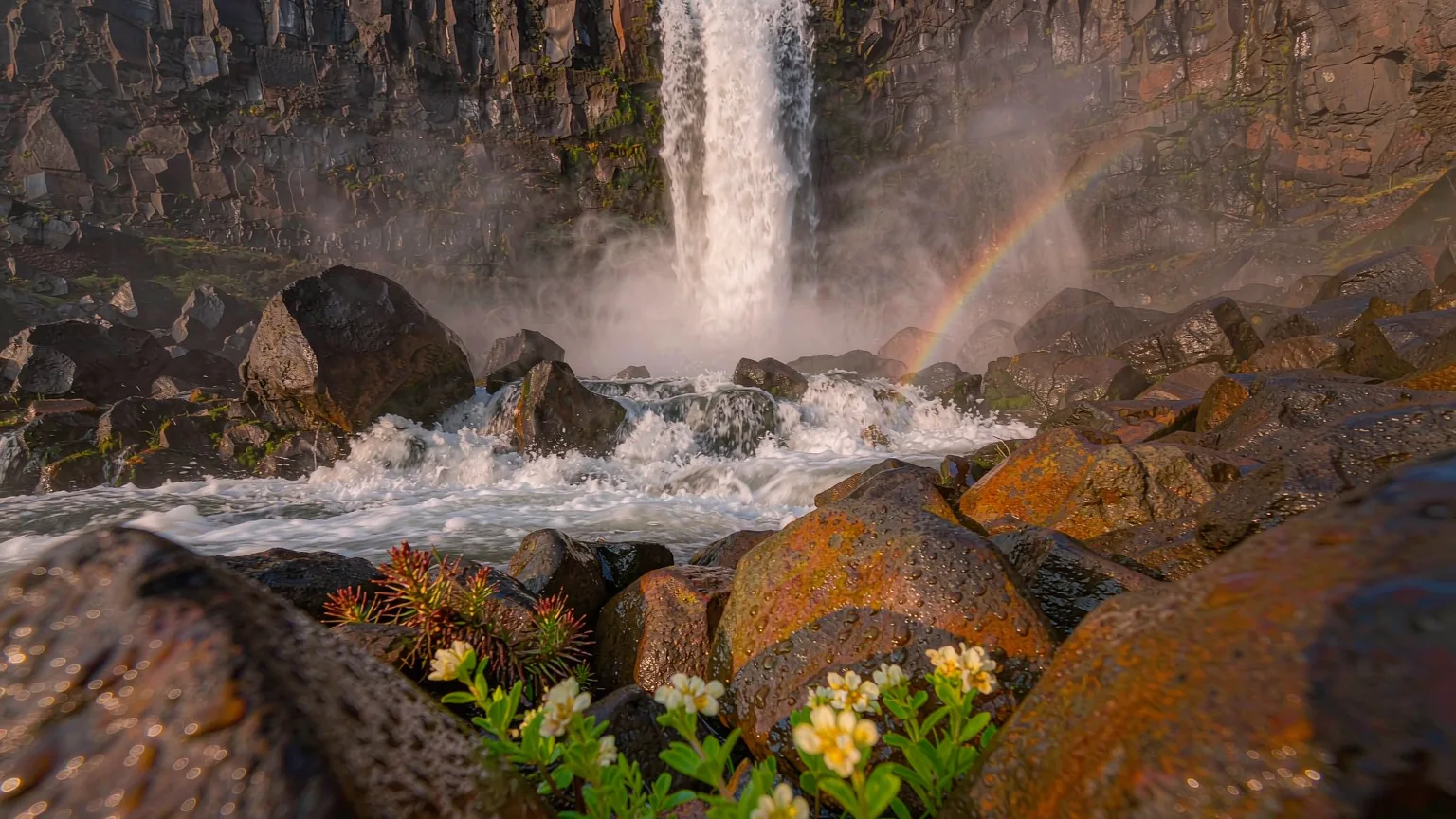
Allow 1.5 to 2 hours from the shuttle drop-off: a 15-minute walk each way plus time at the viewing platforms. Most visitors combine it with Heaven Lake in a half-day north-slope tour.
Yes, but the park's shuttle system and ticket booking are entirely in Chinese. A guide simplifies transfers, secures timed entry, and helps you avoid peak-hour queues at the eco-bus stations.
The north slope remains open in winter, and the waterfall freezes into a spectacular ice curtain. However, the boardwalk may close after heavy snow, so check conditions locally or with our team before travelling.
A rain jacket, non-slip shoes, sun protection, and a waterproof phone pouch. The mist is constant, and temperatures at 2,100 metres are 5–10°C cooler than at the park gate.
Tell us your dates, group size and preferences — a dedicated consultant will reach out within 24 hours.