
Guest — sign in to save your enquiries.
My account
Binhai Road is Dalian's celebrated coastal drive, a ribbon of asphalt that links Xinghai Square, Tiger Beach and Bangchui Island along some of northeast China's most photogenic shoreline. It is not a single sight but a 30-kilometre sequence of cliffs, coves and lookout points. With our private driver-guide, you skip the bus crowds and stop exactly where the light is best.
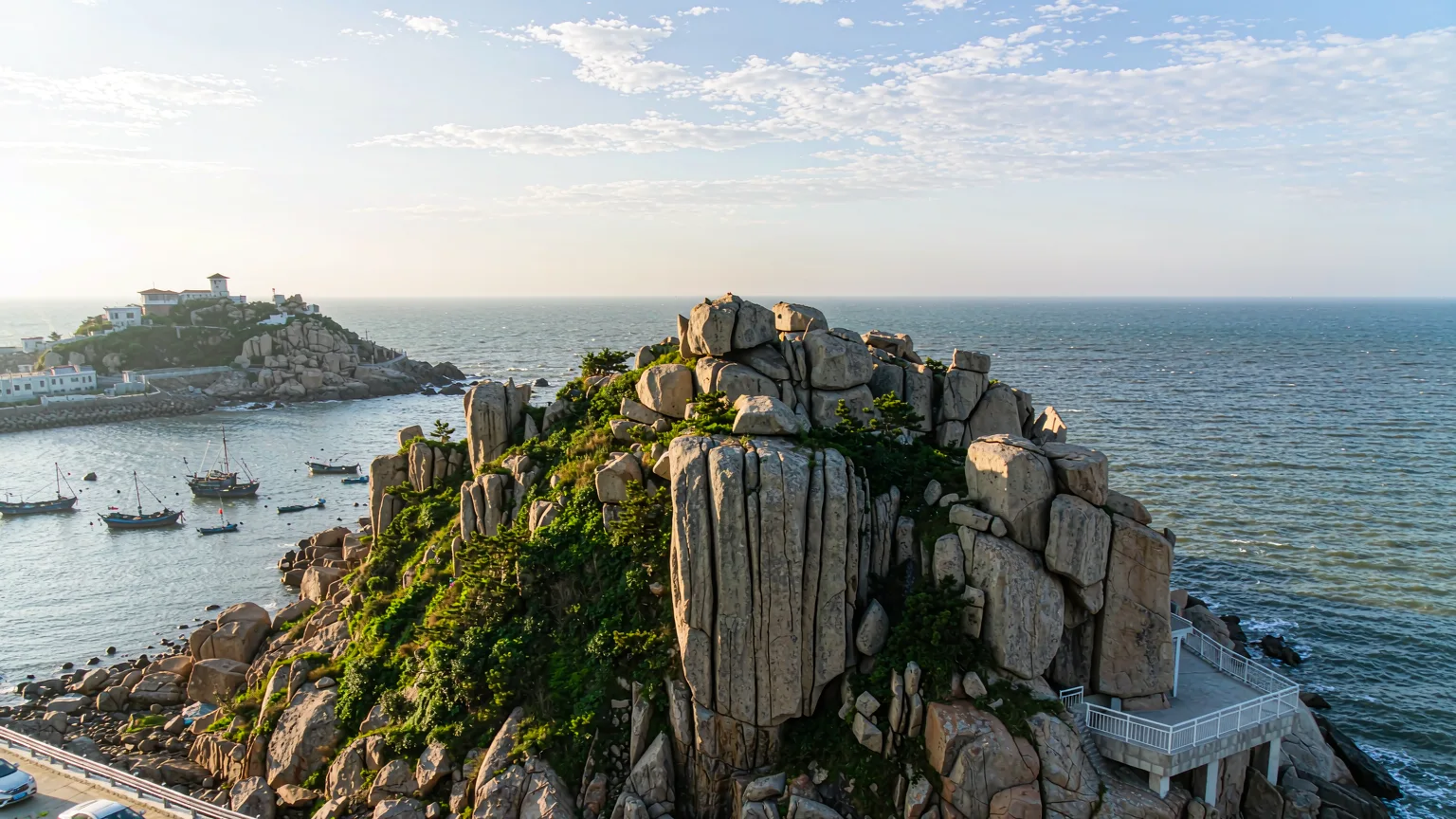
Binhai Road (滨海路) traces the southern edge of Dalian Peninsula, running roughly from Xinghai Square in the west to Donghai Park in the east. Built in the 1970s as a military access road and later opened to the public, it was widened and landscaped in the 1990s to become the city's signature scenic route. The road hugs steep granite slopes where the Yellow Sea meets the land, passing small fishing harbours, pebble beaches and the Yanwoling bridge, a favourite viewpoint for sunset over the bay.
The route is divided into three sections: West (Xinghai Square to Fujiazhuang), Middle (Fujiazhuang to Tiger Beach) and East (Tiger Beach to Bangchui Island). Each has a distinct character — the west is broad and family-friendly, the middle is cliff-hugging and dramatic, the east is quieter with forest and sea views. For a deeper look at the city's other highlights, see our Dalian city guide.
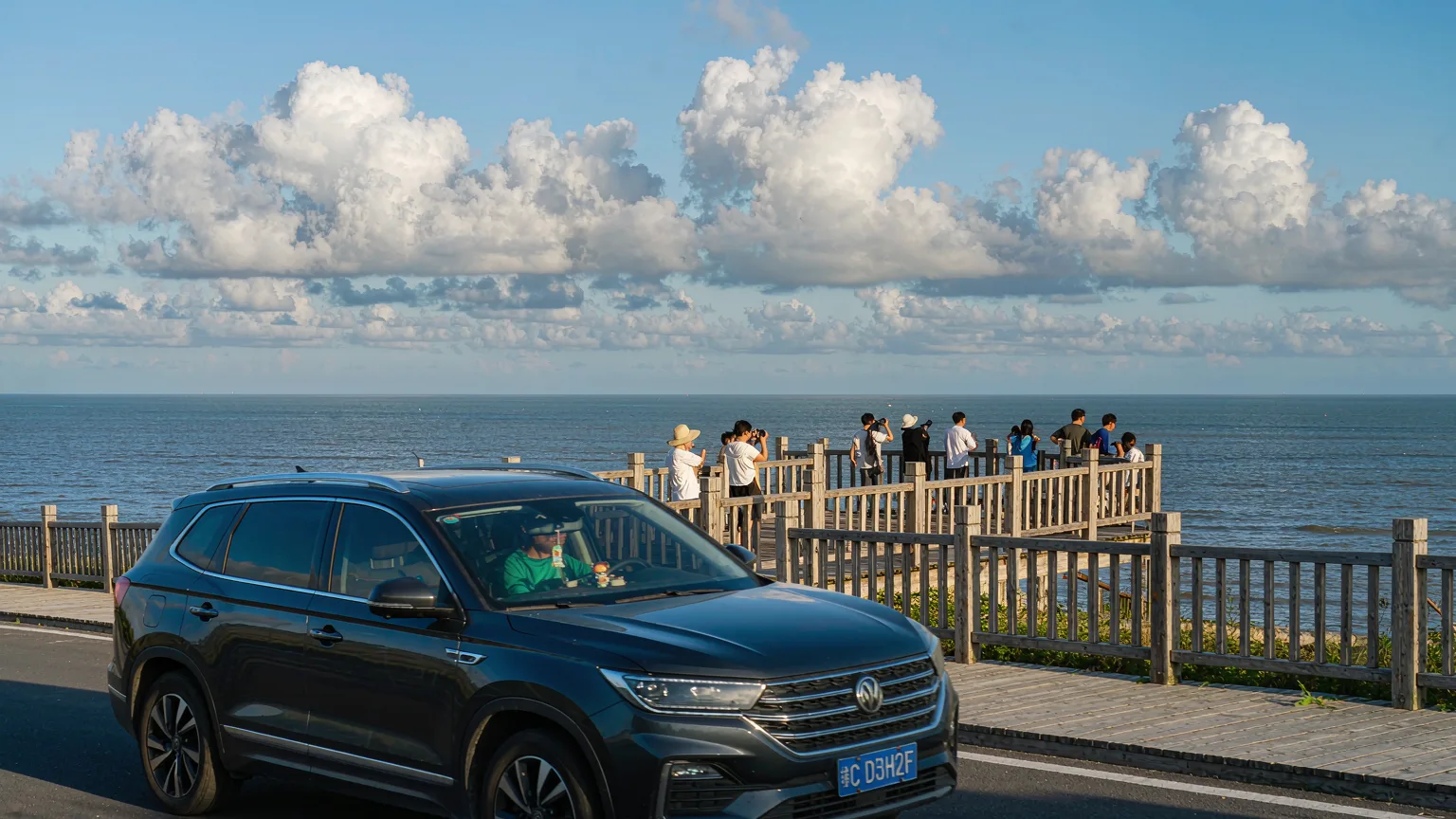
Binhai Road is best experienced with a private car and driver, as public transport only touches its endpoints. From Dalian Railway Station, take Metro Line 2 to Xinghai Square (¥3–5) and start there; taxis from the city centre cost about ¥30–50. If you prefer to drive yourself, note that the road is one-way eastbound on weekends. We usually slot it into a half-day loop, combining it with a stop at Tiger Beach or Bangchui Island.
The road itself is free to drive or walk. Individual attractions along the way charge separate fees: Tiger Beach Polar Aquarium ¥220, Bangchui Island ¥20, and Xinghai Square is free. Opening hours vary by site, but the road is accessible 24 hours. Book aquarium tickets via WeChat mini-programs; foreign cards are not accepted at most ticket booths, so use Alipay or WeChat Pay linked to an international card.
Late spring (May–June) and early autumn (September–October) offer mild temperatures and clear skies. Avoid weekends and Chinese public holidays when the road is congested. For photography, go in the late afternoon: the sun sets behind the western hills, casting a golden glow on the cliffs and sea. Winter can be windy but rewarding for seal spotting at Bangchui Island.
Yes, a private car or taxi is the most practical way to cover the 30km route. Public buses only serve the endpoints, and walking the entire road is not recommended due to distance and traffic.
Cycling is possible but challenging due to hills and traffic. Some sections have shared lanes, but we advise against it unless you are an experienced cyclist.
Yes, it is open to the public for a ¥20 entrance fee. However, access may be restricted during military exercises; check locally or with our guide on the day.
Water, sunscreen, a hat, and a light jacket for sea breezes. Binoculars are useful for wildlife and ship-spotting. Most importantly, a charged phone with a working payment app.
Tell us your dates, group size and preferences — a dedicated consultant will reach out within 24 hours.