
Guest — sign in to save your enquiries.
My account
Barkhor Street is the beating heart of old Lhasa, a sacred pilgrimage circuit that circles the Jokhang Temple. For centuries, Tibetan pilgrims have walked this route clockwise, spinning prayer wheels and murmuring mantras, while merchants sell everything from butter lamps to turquoise. With our private guide, you'll navigate the crowds, understand the etiquette, and uncover the stories behind this UNESCO-listed treasure.
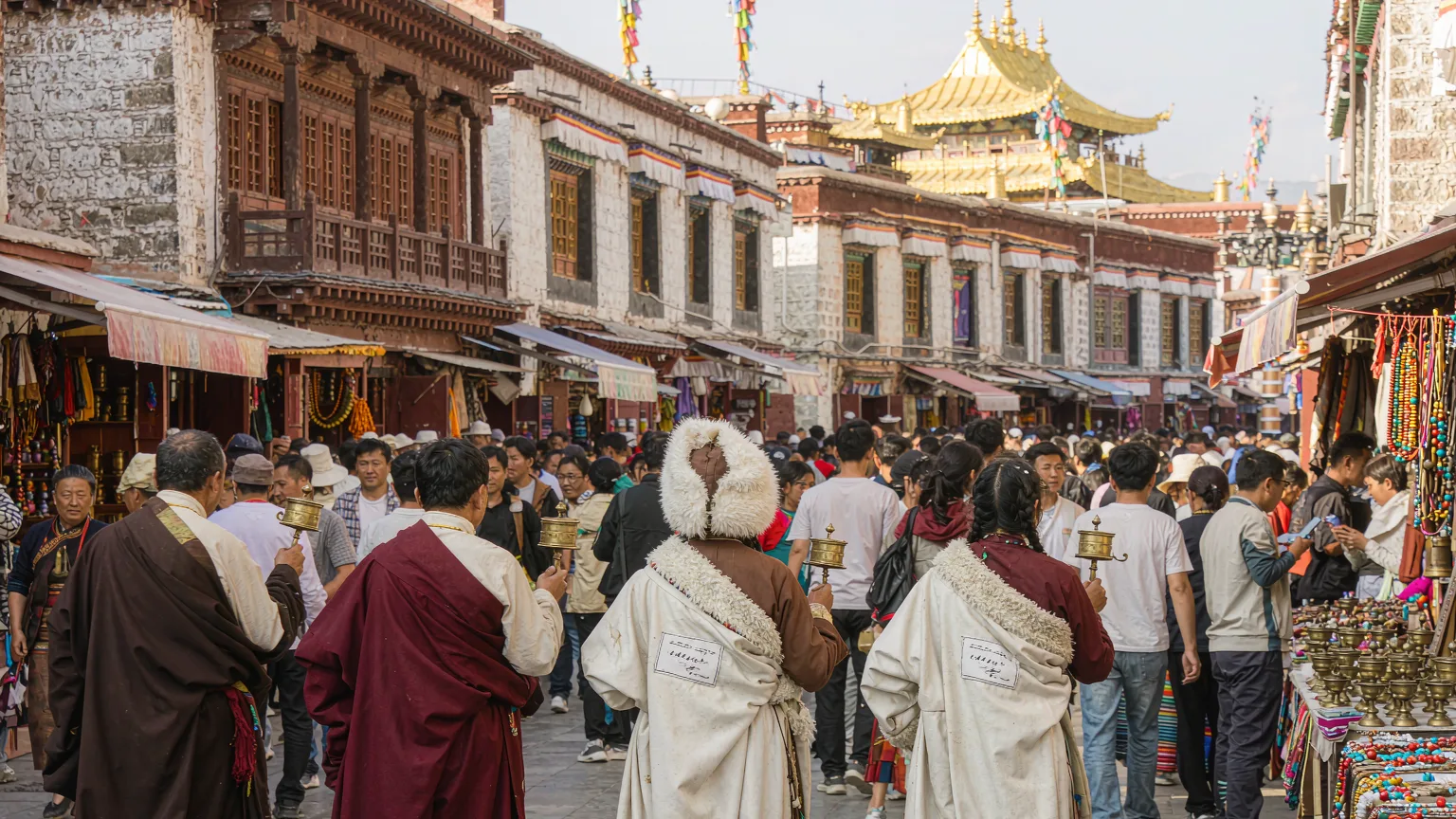
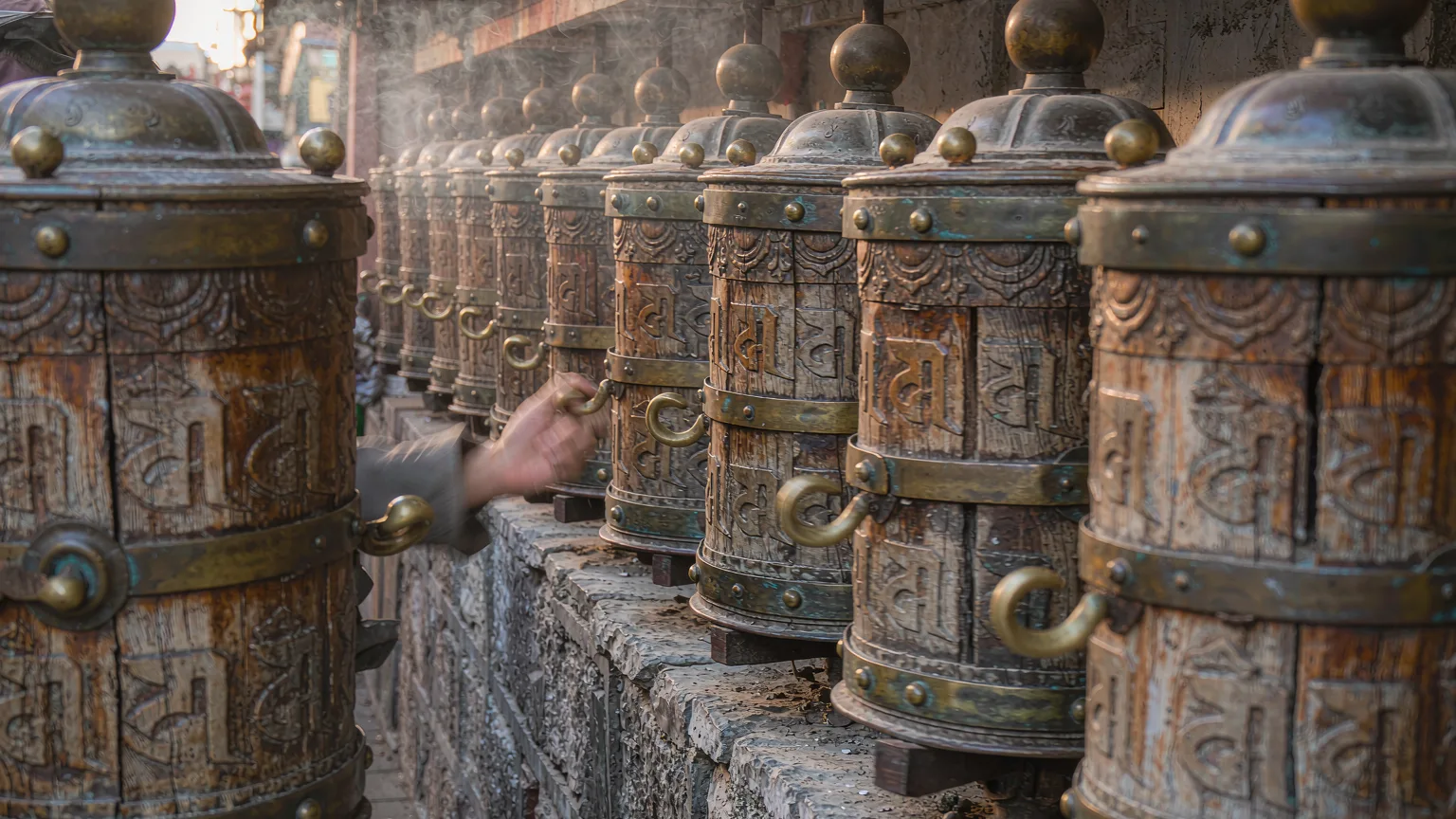
Barkhor Street, known in Tibetan as Barkhor, is a 1-kilometer-long circular pilgrimage path that encircles the Jokhang Temple, the most sacred shrine in Tibetan Buddhism. Established in the 7th century when the Jokhang was built, the street has been a focal point of Lhasa's spiritual and commercial life for over 1,300 years. Pilgrims from all over the Tibetan plateau come to walk the kora (circumambulation), often prostrating themselves along the way. The area was designated part of the UNESCO World Heritage Site 'Historic Ensemble of the Potala Palace, Lhasa' in 1994, recognizing its outstanding cultural significance.
Today, Barkhor Street is a vibrant mix of the sacred and the secular. The cobblestone path is lined with stalls selling religious artifacts, traditional Tibetan clothing, handicrafts, and souvenirs. Behind the bustling market facade, ancient monasteries and incense-filled chapels dot the side alleys. The street remains a living testament to Tibetan culture, where the rhythm of daily life is still dictated by religious practice. For travellers, it offers an immersive experience of Lhasa's unique atmosphere, especially during early morning or late afternoon when the crowds of pilgrims are most active.
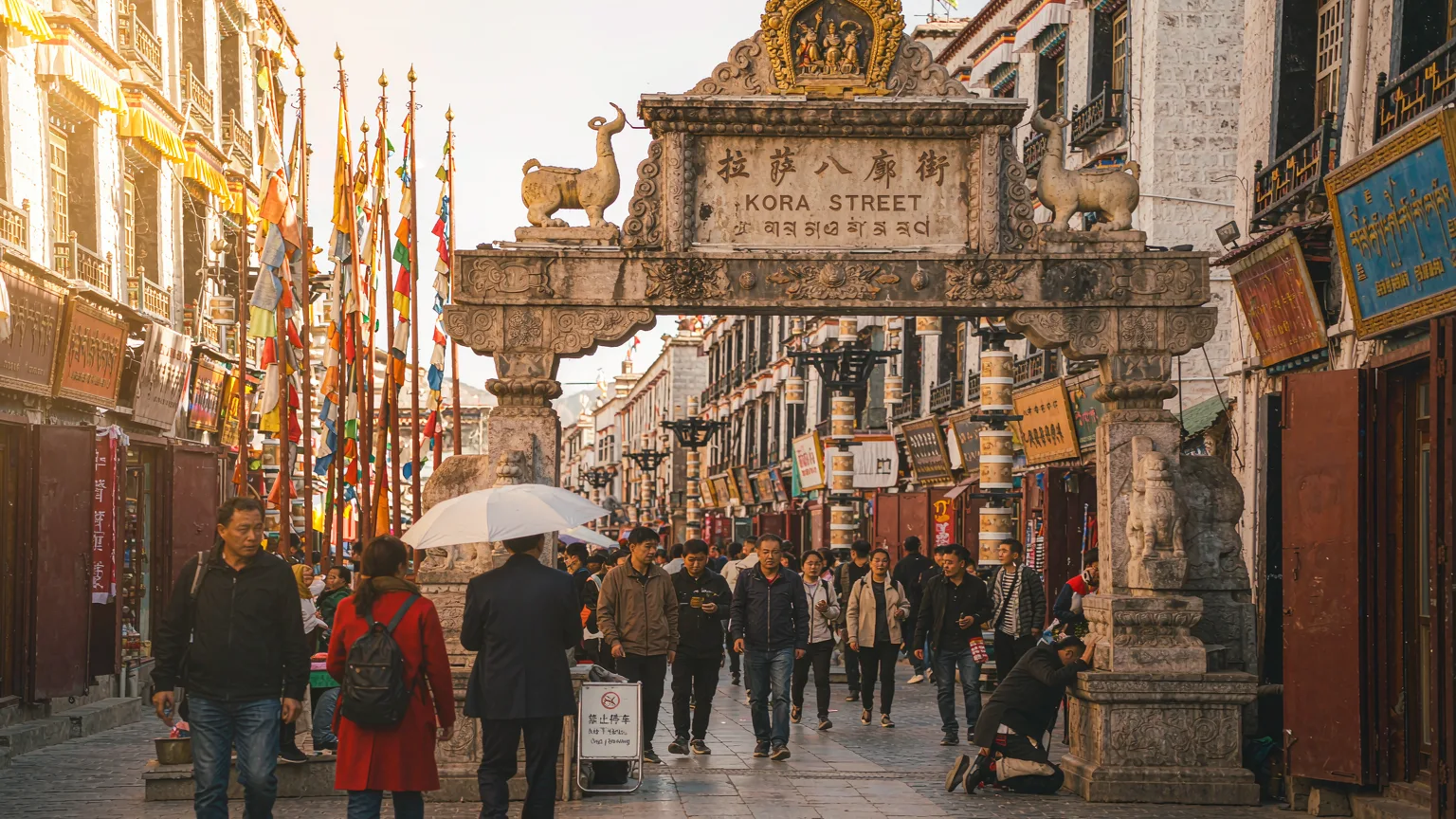
Barkhor Street is in the heart of old Lhasa, easily accessible on foot from most hotels in the city center. If you're staying further afield, a taxi to the Jokhang Temple area takes 10–20 minutes and costs around ¥15–30. Public buses also stop nearby, but the narrow streets are best explored on foot. We recommend visiting as part of a guided day tour that includes the Jokhang Temple and Potala Palace, with our guide handling all logistics and permits.
Barkhor Street itself is free to enter and open 24 hours, though the Jokhang Temple requires a ticket (¥85 in high season, ¥35 in low season) and has limited opening hours (typically 9:00–17:00). For the temple, book in advance through your guide, as daily visitor numbers are capped. Bring cash in small denominations (¥1, ¥5, ¥10) for offerings and street purchases; while WeChat Pay and Alipay are widely accepted, foreign cards may not link easily, so cash is safer.
The best time to visit Barkhor Street is early morning (7:00–9:00) when pilgrims gather for the first kora of the day, or late afternoon (16:00–18:00) when the light is golden and the atmosphere is most vibrant. Avoid midday during peak tourist season (July–August) when crowds are dense. Spring (April–May) and autumn (September–October) offer pleasant weather and fewer visitors.
Yes, the street is free and open 24/7. However, entering the Jokhang Temple requires a ticket (¥85 high season, ¥35 low season) and is subject to opening hours.
Join the pilgrim circuit clockwise, ideally with a guide who can explain the rituals and help you interact respectfully with locals. Early morning or late afternoon offers the most authentic atmosphere.
Yes, foreign travellers need a Tibet Travel Permit, which must be arranged through a licensed tour operator at least 15 days in advance. Our team handles this for you.
Most vendors prefer cash or Chinese mobile payments (WeChat Pay/Alipay). Foreign credit cards are rarely accepted, so carry enough cash in small bills.
Tell us your dates, group size and preferences — a dedicated consultant will reach out within 24 hours.