
Guest — sign in to save your enquiries.
My account
Baisha Ancient Town is the original Naxi capital, a sleepy village of mud-brick courtyards and willow-lined lanes at the foot of Jade Dragon Snow Mountain. Its 600-year-old murals blend Tibetan, Han and Naxi Buddhist art — a national treasure few visitors see. With our private guide, you skip the Lijiang crowds and meet the town at its own unhurried pace.

Baisha (White Sand) was the political and cultural heart of the Naxi kingdom from the 10th to the 14th century, before the Ming dynasty moved the capital to what is now Lijiang Old Town. Its name comes from the white sand that once covered the surrounding fields. The town's fame rests on the Baisha Mural, a set of religious paintings created between the late Ming and early Qing dynasties (16th–17th centuries) in the Dabaoji Palace and nearby halls. These murals are unique because they combine Tibetan Buddhist, Han Chinese Buddhist and Naxi Dongba iconography in a single composition — a rare visual record of the cultural crossroads that was the Tea Horse Road.
Unlike the commercialised Lijiang Old Town, Baisha remains a living village where Naxi elders still wear traditional sheepskin capes and tend vegetable plots. The main sights are clustered around a small square: the Dabaoji Palace with its 12 large murals, the Liuli Hall, and the Dading Pavilion. A short walk away, Dr. Ho's former residence (a 20th-century Austrian botanist who lived here for decades) offers a quiet garden. The town is compact and can be explored in two to three hours, but the atmosphere invites lingering. Our guides know the families who maintain the mural halls and can arrange a private viewing outside peak hours.
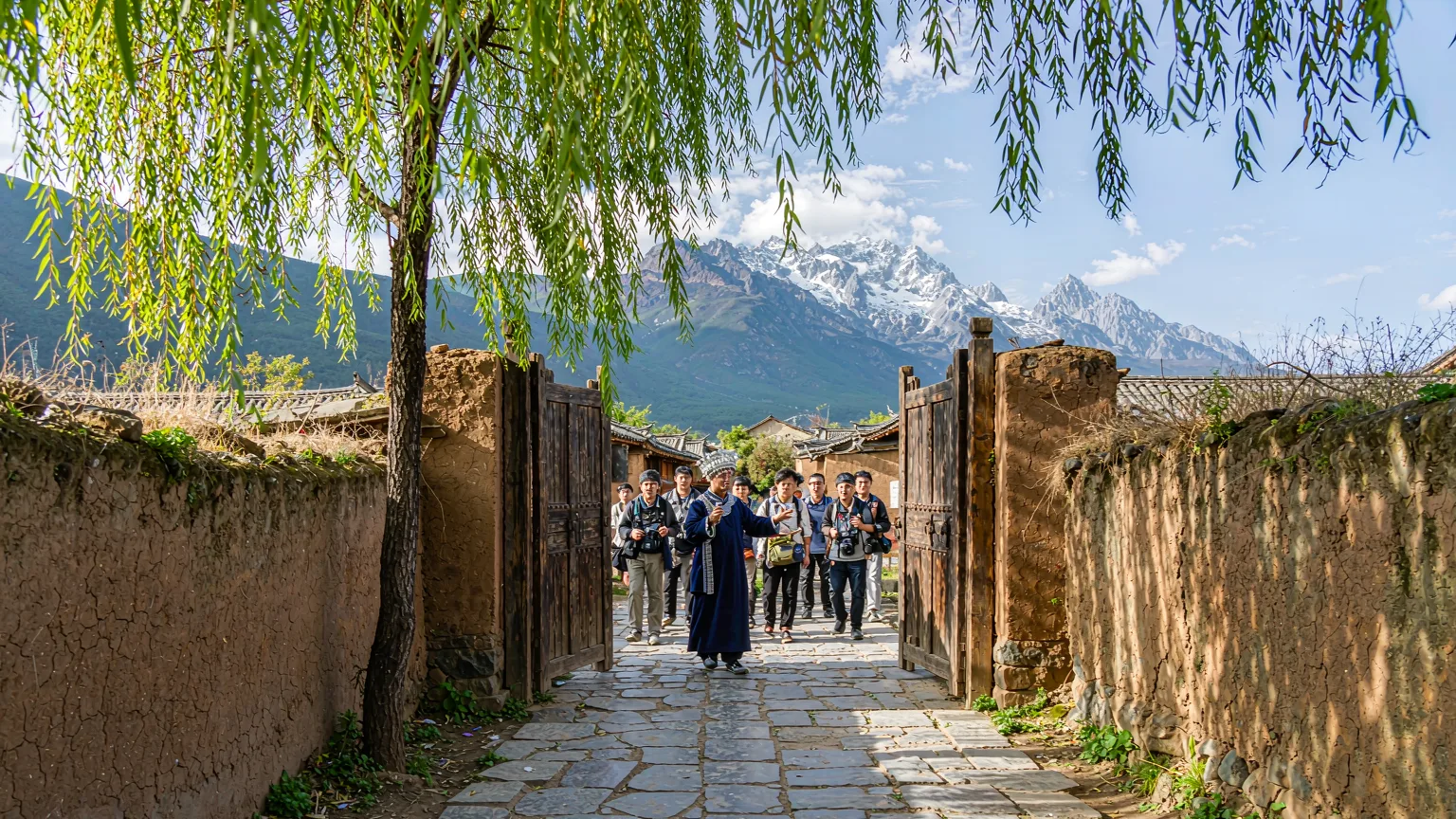
Baisha is about 10 km north of Lijiang Old Town. The easiest way is a private car or taxi (¥30–50, 20–30 minutes) from Lijiang; our guide can arrange a round-trip transfer. Public bus No. 6 from Lijiang's Xiangshan Market also goes to Baisha (¥2, 40 minutes), but it can be crowded. Many travellers combine Baisha with a visit to Yuhu Village and Jade Dragon Snow Mountain on a full-day loop. We recommend going in the morning to avoid afternoon tour buses.
Entry to Baisha Ancient Town is free, but the mural halls require a combined ticket: ¥30 per person (includes Dabaoji Palace, Liuli Hall and Dading Pavilion). Opening hours are 8:00–18:00 (last entry 17:30). Tickets can be bought at the gate; foreign credit cards are not accepted, so bring cash or use WeChat Pay/Alipay linked to an international card. Our guide can pre-book to skip any queue.
The best time to visit is March to May or September to November, when skies are clear and temperatures mild. Arrive by 9:00 to catch soft morning light on the murals and see village life before tour groups arrive. Avoid weekends and Chinese public holidays, when domestic tourists flood the site. Winter mornings can be chilly but offer the clearest views of Jade Dragon Snow Mountain.
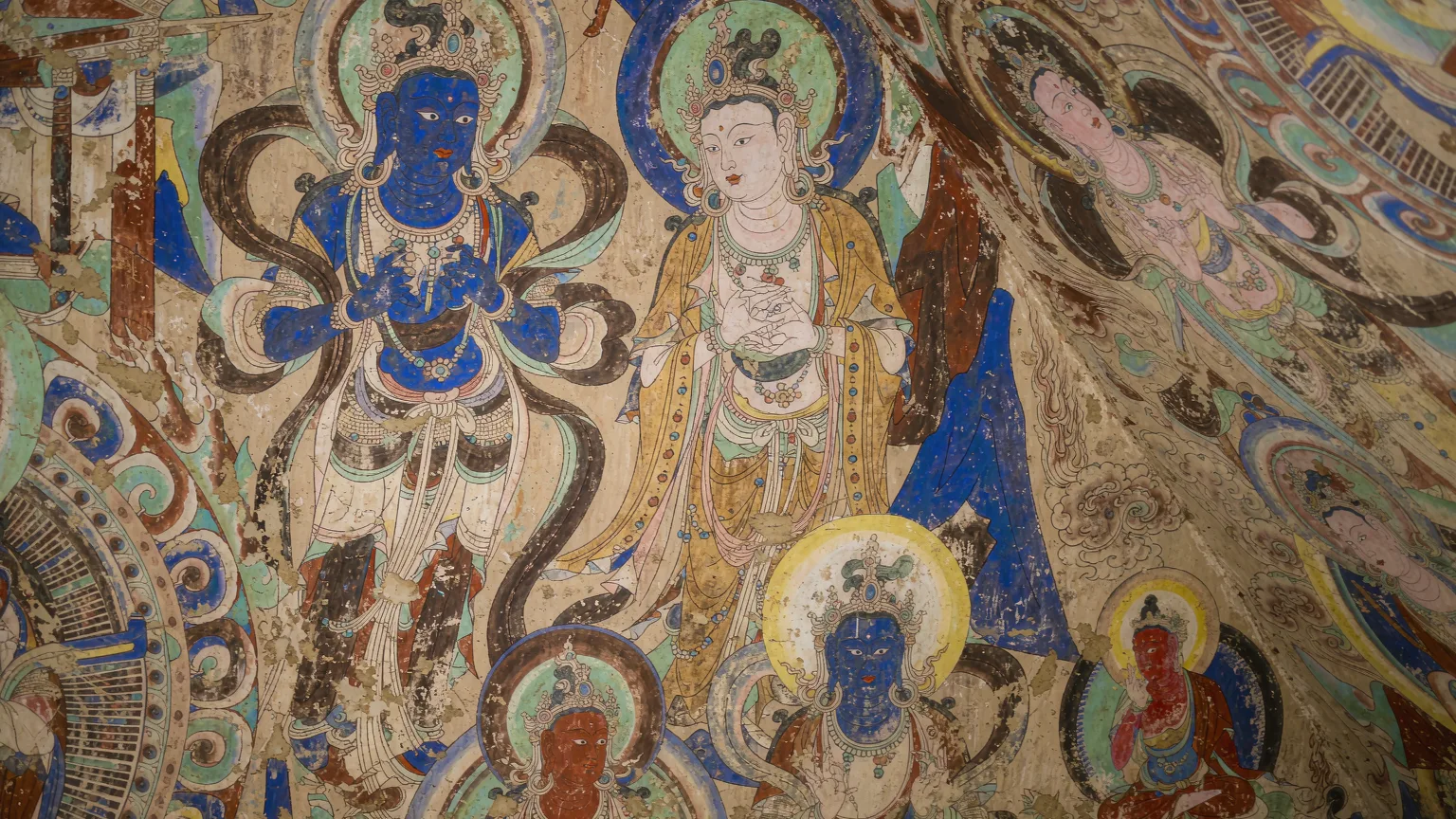
Yes, the core murals in Dabaoji Palace date to the late Ming and early Qing dynasties (16th–17th centuries). Some have been restored, but the majority are original and protected as national cultural relics.
Two to three hours is enough to see the main halls and stroll the village. If you want to include Dr. Ho's Residence and a coffee break, allow half a day.
Absolutely. It's a 20–30 minute drive from Lijiang Old Town, making it an easy morning or afternoon excursion. Many travellers pair it with nearby Yuhu Village.
No, credit cards are not accepted at the ticket office or most shops. Bring cash (¥) or set up WeChat Pay/Alipay with your international card before you arrive.
Tell us your dates, group size and preferences — a dedicated consultant will reach out within 24 hours.