
Guest — sign in to save your enquiries.
My account
Badaguan is Qingdao's quietest surprise: a leafy seaside neighbourhood where ten streets named after ancient Chinese passes are lined with hundreds of villas in German, Russian, British, Japanese and Spanish styles. It is often called a living museum of world architecture, and with our private guide you can wander its shaded lanes, step into the best-preserved houses, and reach the coast without wasting a minute on logistics.
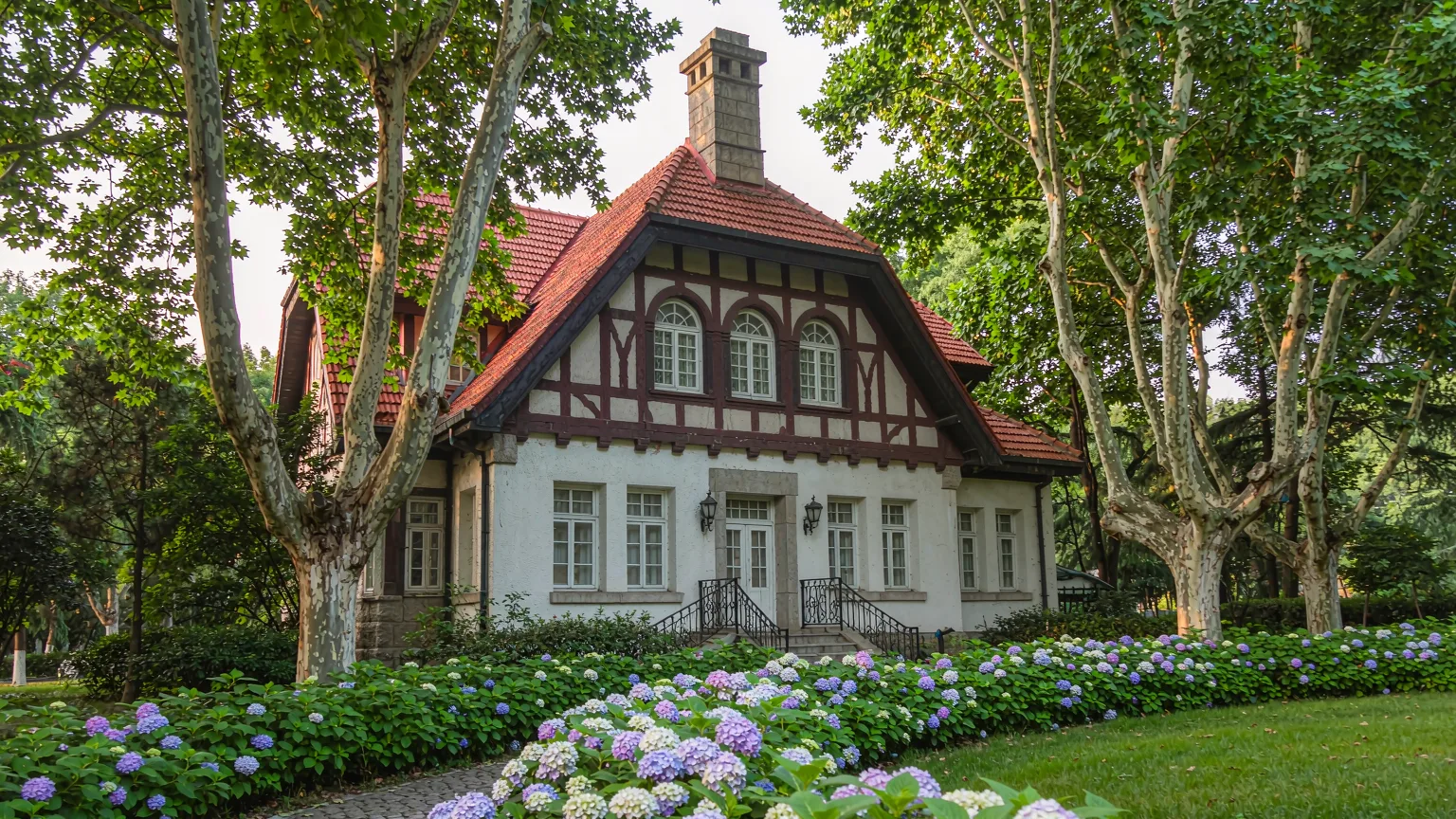
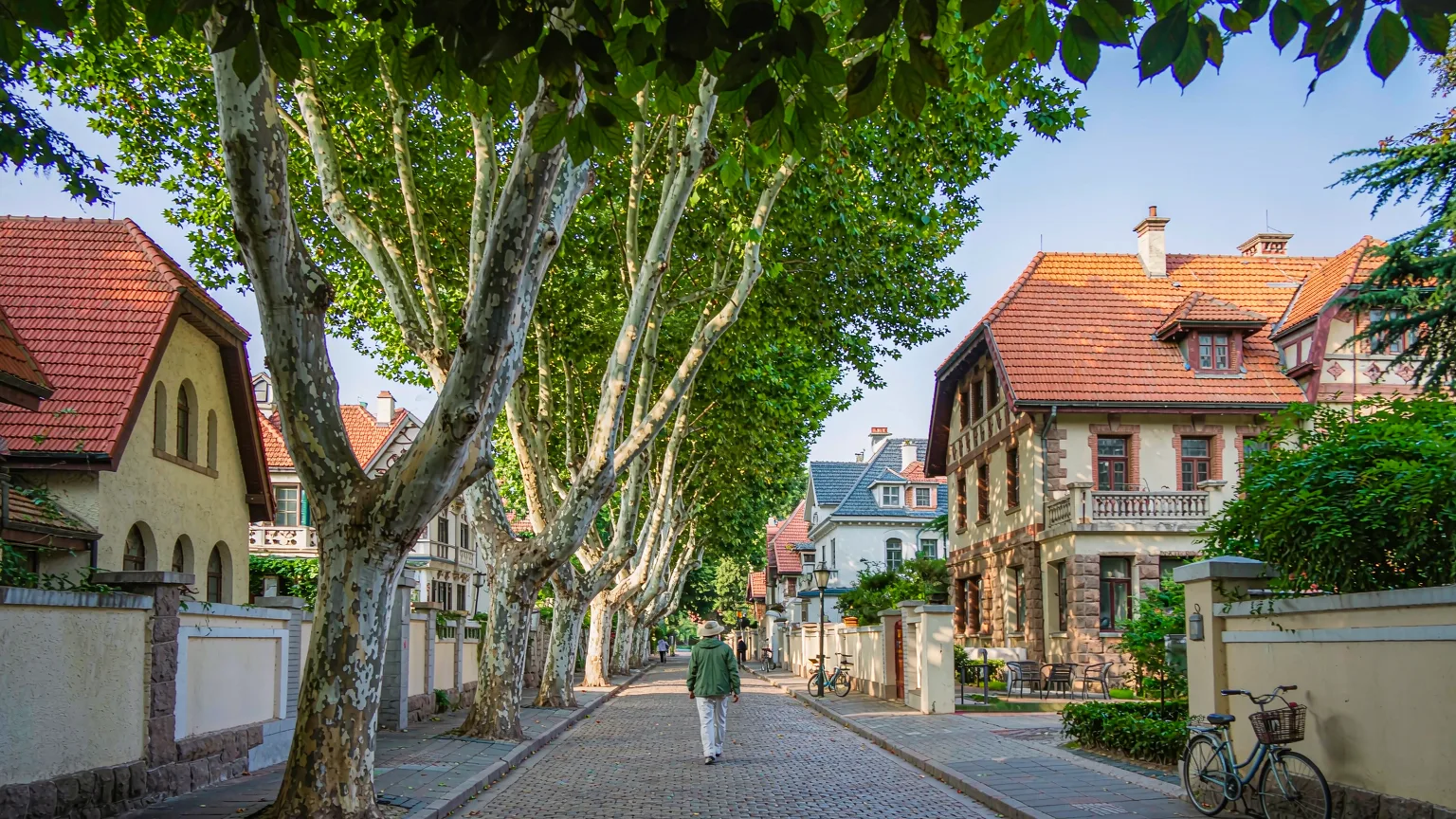
Badaguan — literally 'Eight Great Passes' — began as a residential enclave in the early 20th century, when Qingdao was a German concession and later a summer retreat for Chinese officials, warlords and foreign merchants. The streets were laid out from 1920s onward and named after historic mountain passes such as Shanhaiguan, Jiayuguan and Wushengguan; today there are ten such roads, though the old name stuck. Each villa was built to its owner's taste, so within a few blocks you pass half-timbered German cottages, Russian onion domes, Japanese tile roofs and Mediterranean courtyards, all softened by mature plane trees and flowering magnolias.
The area sits between the calm waters of Taiping Bay and the wooded slopes of Taiping Hill, making it as much a landscape as an architectural site. Several buildings are open to the public, including the Huashi Lou (Butterfly House) and the former residence of Danish Princess Margrethe, while others remain private or serve as guesthouses. For a deeper look at Qingdao's treaty-port history, pair Badaguan with the nearby Qingdao Branch Museum or the Zhanqiao Pier area. Our guides know which gates are open, which lanes are empty at which hour, and how to weave the villas into a half-day coastal walk.
Badaguan is about 3 km east of Qingdao's old town, easily reached by taxi or ride-hailing (around ¥15–25 from Zhanqiao Pier) or by metro Line 3 to Taipingjiao Station, then a 10-minute walk. Many travellers combine it with a morning at Zhanqiao Pier and a seafood lunch, then continue to May Fourth Square or the Olympic Sailing Center. With our private car and guide, you avoid parking hassles and can hop between villas, the coast and nearby museums in one smooth half-day.
The scenic area itself is free to walk; individual villa museums charge ¥10–30 each, with combined tickets sometimes available. Opening hours vary by building, typically 8:30–17:00, closed Mondays. Book villa tickets via WeChat mini-programs or on-site; foreign cards are rarely accepted at small counters, so carry WeChat Pay or Alipay linked to an international card, or let our guide handle payment.
Late April to June and September to October offer the most comfortable temperatures and the best light, with spring magnolias and autumn foliage. Weekday mornings before 10am are quietest; weekends and Chinese holidays bring tour groups. For photography, the golden hour along Taiping Bay is superb, but villas close by 17:00, so plan interiors first and save the coast for sunset.
Yes, walking the streets is free. You only pay ¥10–30 per villa museum you enter, and some combined tickets are available. Our guide can advise which houses are worth the entry fee.
Allow 2–3 hours for a leisurely walk, including one or two villa museums and a stop at the coast. With a guide, you can see the highlights in 90 minutes without rushing.
Huashi Lou (Butterfly House) and the Princess House are the most popular for their architecture and stories. If you only have time for one, choose Huashi Lou for its unique shape and central location.
Generally no. Most ticket counters prefer WeChat Pay or Alipay, and cash in CNY is accepted. Link your international card to Alipay or WeChat before you go, or let our guide purchase tickets for you.
Tell us your dates, group size and preferences — a dedicated consultant will reach out within 24 hours.