China Halal Itinerary: 8 Days on the Silk Road for Muslim Travellers from Singapore & Malaysia
A prayer-friendly, fully halal 8-day Silk Road route from Kuala Lumpur or Singapore - Xi'an, Lanzhou, Linxia, Xining and Urumqi, with mosques, halal restaurants and high-speed trains mapped day by day.
Why the Silk Road is the natural halal route through China
For Muslim travellers from Singapore and Malaysia, northwest China is the most comfortable first trip: it is the historic heartland of Chinese Islamic culture, home to around 35,000 mosques, and halal food is not an exception here - it is the default. Malaysian tour operators already sell this exact corridor (an 8-day Xi'an-Lanzhou-Zhangye group package runs about RM 4,600 per person), but with Malaysia and Singapore now enjoying 30-day visa-free entry, an independent or private-guided version costs meaningfully less and moves at your own pace.
This itinerary assumes a Saturday arrival and Sunday departure - eight days, seven nights - using high-speed rail for the long legs and one short flight. Every overnight stop has a major active mosque for Friday prayers or daily salah.
| Day | Base | Highlights | Mosque |
|---|---|---|---|
| 1 | Xi'an | Arrive, city wall at sunset | Great Mosque of Xi'an |
| 2 | Xi'an | Terracotta Warriors, Muslim Quarter | Great Mosque (Juma at Huajue Lane) |
| 3 | Lanzhou | Bullet train, beef noodles, Yellow River | Xiguan Mosque |
| 4 | Linxia day trip | China's "Little Mecca", Liujiaxia Reservoir | Linxia mosques |
| 5 | Xining | Bullet train, Dongguan Mosque, halal breakfast streets | Dongguan Great Mosque |
| 6 | Urumqi (fly) | Grand Bazaar, Uyghur dinner | Urumqi Grand Mosque area |
| 7 | Turpan day trip | Grape valleys, ancient Jiaohe city | Turpan Emin Minaret |
| 8 | Fly home | Direct URC to KUL/SIN options | - |
Day 1-2: Xi'an at halal pace
Fly KL or Singapore to Xi'an (XIY) - normally one stop via Guangzhou, Chengdu or Kunming, with the whole journey inside a morning. Skip the tourist strip on Beiyuanmen and eat in the side alleys: Dapiyuan and Xiyangshi hold the city's serious halal kitchens. Order yangrou paomo (lamb soup you tear bread into) and skewers charcoaled to order. The Great Mosque of Xi'an in Huajue Lane is a working mosque in a Tang-dynasty Chinese garden - visit outside prayer times, and note the Friday 12:00 jumu'ah is followed by thousands.
The Terracotta Warriors need half a morning; book the first entry slot at 08:30, hire the official earphone guide, and you are back in the Muslim Quarter for a late halal lunch. In the evening, the city wall at sunset and the Tang Dynasty Ever-Bright City lights are free.
Day 3-4: Lanzhou and China's Little Mecca
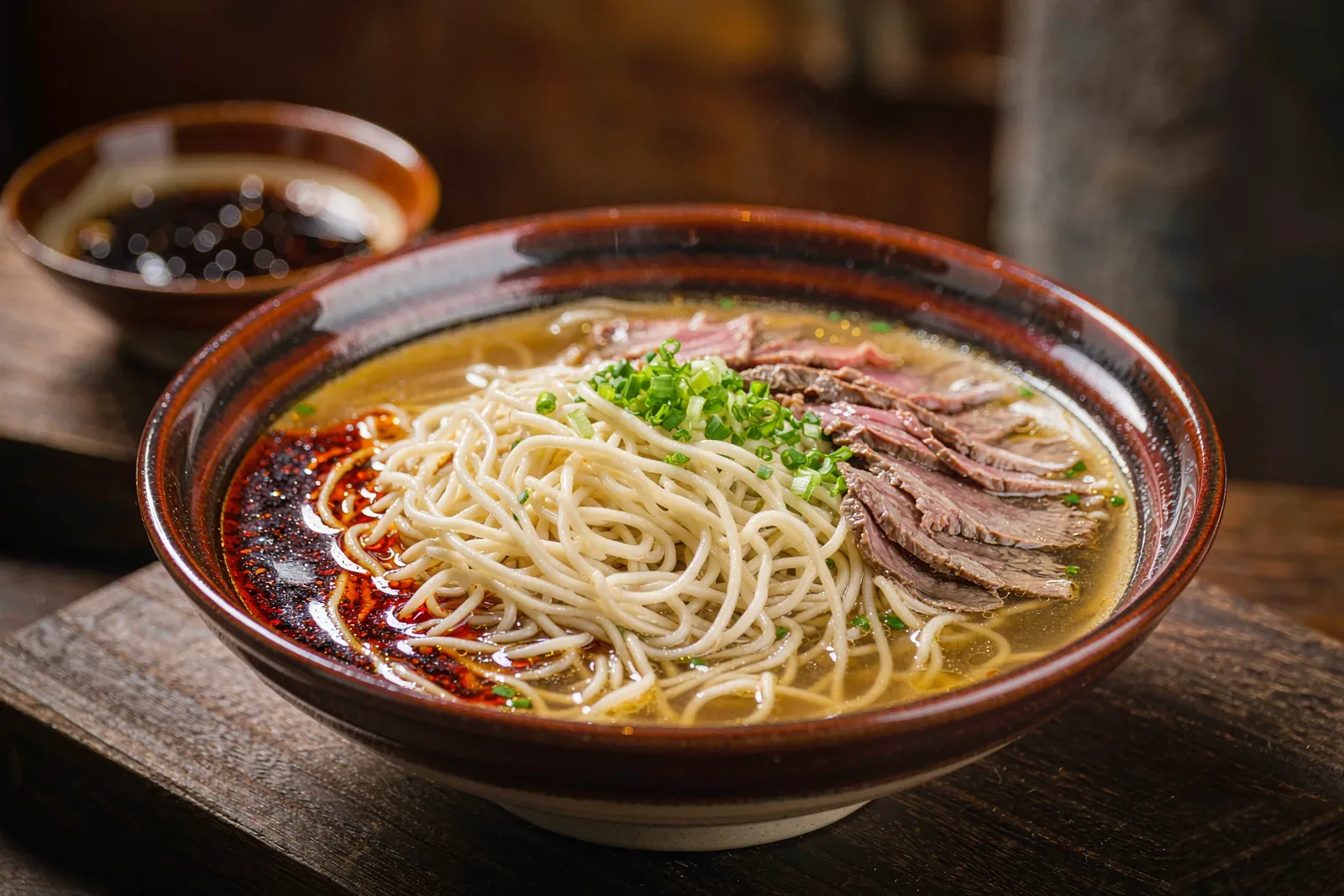
The bullet train to Lanzhou takes about three hours through loess-country tunnels. Lanzhou's claim to fame is the original Lanzhou beef noodles - hand-pulled to order, halal by tradition, and around RMB 12-18 a bowl in Hui-run shops. Walk it off along the Yellow River, then cross to Xiguan Mosque, the city's largest.
Day 4 goes to Linxia, two hours by road: a deeply devout Hui town so dense with mosques it is called China's Little Mecca. Non-Muslims are welcome outside prayer times, and the Eight Lanes and Thirteen Alleys quarter is genuinely immersive. Combine it with the Liujiaxia Reservoir if you want a scenic hour on the water.
Day 5: Xining - Tibetan-Muslim crossroads
Two hours further by rail, Xining sits where Tibetan and Hui worlds meet. Start with the halal breakfast streets around Huanzhong Road - fresh flatbreads, yoghurt and noodles - then Dongguan Great Mosque, one of China's largest, blending Chinese rooflines with Islamic function. Qinghai Lake is a feasible day trip in summer; in winter keep the day in-city.
Day 6-7: Urumqi and Turpan
Fly Xining (or Lanzhou) to Urumqi in about 2.5 hours and drop bags near the International Grand Bazaar - a working food market as much as a landmark. Uyghur classics to hunt: dapanji (chicken over noodles - confirm halal-certified kitchens for chicken dishes), lamb skewers, polo pilaf and samsa pastries. In Xinjiang, lamb-centric restaurants are halal by default; still look for the green qingzhen sign.
Turpan, 1.5 hours by high-speed rail, is the ancient Uyghur oasis of grape trellises and the ruined city of Jiaohe. September-October is harvest season and the best weather window.
Costs and practical notes
| Item | Approx cost |
|---|---|
| KUL/SIN-Xi'an return (1 stop) | SGD 380-550 / RM 1,300-1,800 |
| High-speed rail Xi'an-Lanzhou-Xining | RMB 160-260 per leg (2nd class) |
| Flight Xining/Lanzhou-Urumqi | RMB 400-700 |
| 4-star hotels, per night | RMB 250-450 |
| Halal meals per day | RMB 80-150 |
| Private English-speaking guide, per day | RMB 450-700 |
- Apps: install Alipay (foreign cards work), Dianping and Baidu Maps - search "清真餐厅" for halal restaurants anywhere
- Prayer: every overnight city has a major mosque; Friday jumu'ah is strongest in Xi'an and Xining. Carry a pocket prayer mat for travel days
- Language: "qingzhen" (清真) is the word that unlocks everything halal
- Best months: April-June and September-October; winters are cold but crowds thin
For the food side in depth - what to eat city by city - see our halal food guide for Muslim travellers. We arrange private halal Silk Road trips with every restaurant pre-confirmed, prayer times built into the driving schedule and English-speaking guides: send us your dates for a free plan.
Cẩm nang liên quan